
Most businesses don’t question their cargo coverage until something goes wrong.
A shipment is damaged. Freight goes missing. A claim is filed. Then comes an unexpected surprise: the amount recoverable is much lower than expected.
Many shippers assume their freight is automatically covered for its full value, but that isn’t always the case. Understanding the difference between carrier liability and separately purchased cargo insurance, along with knowing the true value of your cargo, can make a significant difference when a loss occurs.
Knowing what’s at stake can help guide transportation planning, documentation, risk management, and coverage decisions long before a shipment is on the road.
Key Takeaways
- Carrier liability and cargo insurance are different. Carrier liability may only apply when the carrier is responsible for a loss, while cargo insurance can provide broader protection based on the value of the goods.
- Your freight may not be protected for its full value. Carrier insurance requirements and liability limits don’t necessarily match the value of your shipment.
- Know your cargo’s true value before it moves. Consider the invoice value along with potential replacement costs and the broader business impact of a loss or delay.
- Cargo insurance costs vary by risk. Commodity, shipment value, route, transportation mode, and theft exposure can all influence coverage needs and cost.
- Documentation matters when filing a claim. Invoices, bills of lading, photos, delivery receipts, and other shipment records can help support the claims process.
Cargo Risks That Can Affect Coverage Decisions
Every shipment carries some level of risk, but not every shipment carries the same financial exposure. Understanding what your freight could encounter during transit will help you better evaluate its true value and whether your current coverage is enough.
Most Common Causes of Loss and Damage
- Cargo theft and fraud have become growing concerns across the transportation industry. Identity theft, fraudulent carriers, and cargo theft schemes can expose shippers to significant financial losses.
- Weather-related events can damage freight and delay deliveries. That can create production delays and affect customer commitments.
- Improper handling or load securement can result in damaged cargo, even during routine transportation.
- Vehicle accidents may lead to partial or total shipment loss.
- Warehouse and transfer incidents can occur while freight is being stored, unloaded, or transferred between transportation modes.
No shipment is immune to risk.
You can’t prevent every shipping risk, but knowing the most common causes of cargo loss and damage can help you prepare for them. That’s also why carrier selection matters.
At Trinity Logistics, our thorough carrier vetting process helps ensure freight is moved by qualified, reliable transportation partners.
Cargo Insurance vs. Carrier Liability
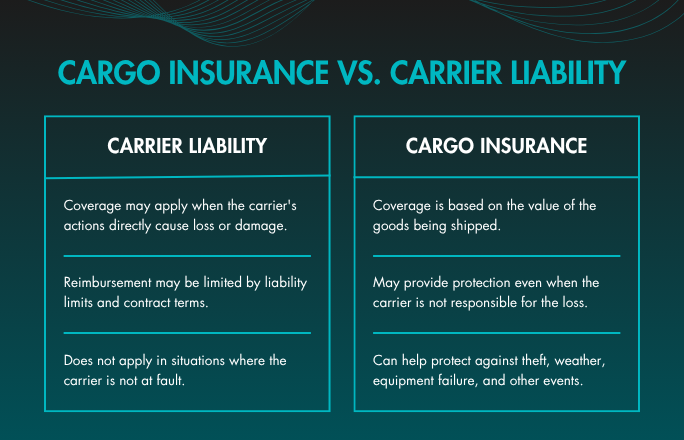
Cargo Insurance and carrier liability are often used interchangeably, but they are not the same.
Think of carrier liability as a legal responsibility when they are found to be at fault for loss or damage. For example, if a driver falls asleep and causes an accident, the carrier may be held liable for the damaged freight. However, reimbursement may be limited depending on the circumstances and applicable liability limits.
A separately purchased cargo insurance policy (sometimes called a shipper’s interest policy) takes a different approach. Instead of focusing on who is responsible, it focuses on the value of the goods being shipped. It may provide protection in situations where carrier liability doesn’t apply, such as theft, equipment failures, or other events that occur outside of the carrier’s direct control.
Let me paint you a picture.
A manufacturer ships $300,000 worth of product. They assume carrier liability will cover the full shipment if something goes wrong. After the freight is damaged, they learn the recoverable amount is much lower than the shipment’s value. They now have to replace inventory, manage customer delays, and absorb unexpected costs. The financial impact isn’t just the damaged freight. It’s everything that comes after it.
So when is carrier liability enough?
Not every shipment needs the same level of protection. Carrier liability may be enough for lower-value freight. But if losing a shipment could disrupt production, delay customer deliveries, or create major replacement costs, a separately purchased cargo insurance policy may be worth considering.
The key is understanding what’s at stake before the shipment moves, so you can choose the level of protection that makes the most sense for your business.
Understanding Shipping Contracts and Coverage Responsibilities
It’s easy to assume everyone involved in a shipment has the same understanding of who’s responsible if something goes wrong. In reality, shipping agreements can assign responsibilities, coverage requirements, and claim procedures differently.
While it may be tempting to skim through the fine print, those details can make a big difference if a shipment is lost or damaged. A shipping agreement may specify who is responsible for obtaining coverage, what documentation is required if a claim is filed, or how liability will be handled after a loss. If those requirements aren’t understood before the shipment moves, you may not realize there’s a gap in coverage until it’s time to file a claim.
It’s also helpful to understand that carriers must meet certain insurance requirements set by the Federal Motor Carrier Safety Administration (FMCSA). However, these minimum requirements are just that- minimums. They aren’t necessarily designed to match the value of every shipment moving across the country.
A carrier can be fully compliant with insurance requirements while hauling a shipment that’s worth far more than the available protection. Now, if that shipment is damaged or lost, that difference becomes your financial exposure.
The takeaway?
Don’t assume every contract, certificate, or coverage requirement offers the same level of protection. Understanding what’s required will prevent confusion and set clear expectations long before a claim enters the conversation.
Determining the Correct Value of Your Cargo
Understanding your cargo value affects more than just your insurance coverage. It influences your carrier selection, routing, shipment visibility, and contingency planning – all areas where experienced logistics partners (like Trinity) can reduce exposure before a shipment leaves the dock.
So, what is your cargo actually worth?
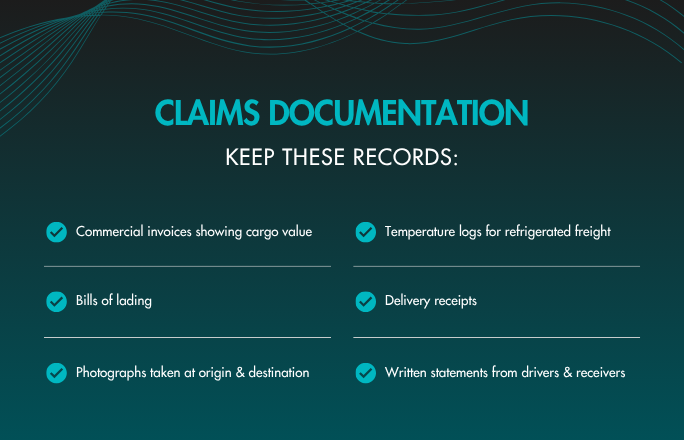
A good place to start is with the current market or invoice value of the goods being shipped. Depending on the type of cargo insurance policy you purchase, the insured value may also include other covered costs outlined in the policy.
But the value of your shipment isn’t the whole story. Also consider what a loss or delay would cost your business.
Those impacts can look different for every business. You may need expedited replacement freight to keep production running. Late deliveries can also lead to lost revenue, retailer chargebacks, and inventory shortages. The costs can add quickly.
It’s also worth thinking beyond the invoice itself. Maybe, you’ve had to overnight replacement products after a shipment was damaged. Or you’ve scrambled to find inventory when critical freight didn’t arrive on time. Those expenses add to the financial impact of a loss, even if they aren’t recoverable through a carrier claim or cargo insurance policy.
Know what your shipment is worth and what a loss could cost your business. That information can help you choose the right coverage before your freight moves.
What Affects Cargo Insurance Costs?
A truckload of office supplies and a truckload of pharmaceuticals may travel the same highway, but they don’t carry the same level of risk. Those differences can influence everything from the likelihood of loss to the type of cargo insurance coverage that makes sense.
What you’re shipping is one of the biggest factors. High-value commodities like electronics, pharmaceuticals, and alcohol are often targeted by thieves. In recent years, sophisticated fraud schemes, including identity theft and load impersonation, have made it easier for criminals to target valuable freight before it ever reaches its destination.
How and where freight moves also makes a difference. Cross-border shipments, theft hotspots, and multimodal transportation can increase the risk of disruption. Each type of shipment comes with its own challenges. Ocean freight, for example, presents different risks than over-the-road transportation, while specialized equipment or hazardous materials often require additional handling and protection.
As a general benchmark, cargo insurance costs typically range from 0.3% to 1% of a shipment’s insured value. That means a $500,000 shipment could cost approximately $1,500 to insure. But of course, it depends on commodity, route, and overall risk profile.
The more you understand your shipment’s risks, the easier it becomes to decide whether standard carrier liability is enough or if additional cargo insurance is worth considering.
When a Claim Happens, Documentation Matters
The actions you take in the hours and days after a shipment is lost or damaged can have a major impact on the claims process. Acting quickly and documenting the situation thoroughly can make the difference between a straightforward claim and a lengthy, frustrating one.
If freight is lost or damaged, time is important. Document the issue as soon as possible by taking photographs, preserving packaging materials and other evidence, and notifying the appropriate parties. While it may be tempting to throw away damaged goods, it’s often best to wait until they’ve been inspected or you’ve received a green light to do so.
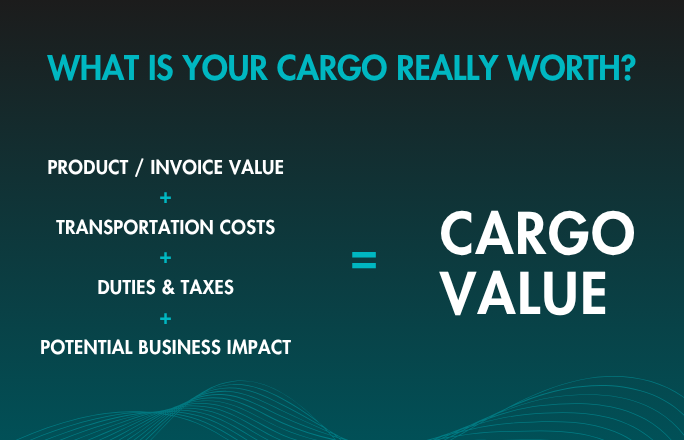
Supporting documentation is equally as important. The more information available, the easier to understand what occurred during transit. Common documents used during the claims process include:
- Commercial invoices showing cargo value
- Bills of lading
- Photographs taken at origin and destination
- Temperature logs for refrigerated freight
- Delivery receipts
- Written statements from drivers and receivers
When a shipment doesn’t go as planned, documentation helps tell the story of what happened. Without them, a single claim can become much more than a paperwork issue. It can leave your business absorbing financial losses that far exceed the value of the freight itself.
Before Your Freight Moves: A Quick Cargo Value Checklist
- Know your shipment’s value.
Confirm the shipment’s invoice or insured value before it ships.
- Review your coverage
Understand what carrier liability covers and whether additional cargo insurance is appropriate.
- Verify documentation requirements
Make sure invoices, bills of lading, and other required records are complete and accurate.
- Communicate shipment requirements
Share handling instructions, delivery expectations, and any special cargo requirements with everyone involved.
- Keep records organized
Store supporting documentation where it’s easy to access if a claim becomes necessary.
Protecting More Than Just Your Freight
Understanding your shipment’s value, your coverage options, and your potential financial exposure is only part of the equation. The next step is working with a logistics partner that helps reduce risk before it turns into an expensive problem.
At Trinity Logistics, we help shippers take a proactive approach to freight risk through qualified carrier vetting, shipment visibility, and experienced logistics support. From helping secure the right capacity to keeping you informed throughout transit, our Team works to reduce the disruptions that can lead to delays, unexpected costs, and complicated claims.
Because protecting your freight isn’t just about what happens after something goes wrong. It’s about making smarter decisions before your shipment hits the road.
CVSA Brake Safety Week returns August 23–29, 2026.
While this annual initiative is designed to improve commercial vehicle safety, it can also create temporary ripple effects throughout the transportation industry.
For shippers, that may mean tighter capacity, longer transit times, and slight fluctuations in freight rates. For carriers, it means increased roadside inspections and greater attention to vehicle maintenance.
The good news is that a little preparation goes a long way for Brake Safety Week.
Whether you’re shipping freight or managing a fleet of trucks, understanding what to expect this week can help minimize disruptions while supporting the larger goal of keeping everyone on the road safer.
Key Takeaways
- CVSA Brake Safety Week runs August 23–29, 2026.
- Commercial vehicle inspectors across the U.S., Canada, and Mexico will conduct increased brake system inspections.
- This year’s inspection emphasis is brake drums and rotors.
- Temporary transportation delays and localized capacity shifts are possible during the inspection period.
- Planning shipments early and communicating with your logistics provider can help reduce disruptions.
Table of Contents
What is CVSA Brake Safety Week?
The Commercial Vehicle Safety Alliance (CVSA) is a non-profit organization dedicated to improving commercial motor vehicle safety across North America through collaboration between law enforcement agencies, government organizations, and the transportation industry.
One of CVSA’s longest-running initiatives is Operation Airbrake, a brake safety program launched in partnership with the Federal Motor Carrier Safety Administration (FMCSA) in 1998. Its mission is simple: reduce crashes caused by brake-related defects through education, inspections, and enforcement.
Each year, Operation Airbrake includes CVSA Brake Safety Week, a weeklong inspection event during which certified inspectors perform brake safety inspections on commercial motor vehicles throughout the United States, Canada, and Mexico.
Unlike CVSA’s International Roadcheck, which examines multiple aspects of a commercial vehicle and driver, Brake Safety Week places special emphasis on one of the most critical vehicle safety systems – the brakes.
Why Brake Safety Matters
Brake-related violations remain one of the most common reasons commercial vehicles are placed out of service during roadside inspections.
According to CVSA, brake system violations consistently rank among the leading vehicle out-of-service violations across North America. Properly functioning brakes help drivers stop safely, maintain vehicle control, and reduce the risk of serious crashes.
This year’s inspection emphasis is brake drums and rotors.
Inspectors will be paying close attention to signs of damage, including:
- Cracked brake drums
- Missing or broken pieces
- Heat damage
- Excessive wear
- Rotor defects that could reduce braking performance
These components play a critical role in stopping a commercial vehicle safely. If a drum or rotor is damaged beyond acceptable limits, the vehicle may be placed out of service until repairs are completed.
While Brake Safety Week is primarily about improving roadway safety, removing unsafe equipment from the road can also create temporary operational impacts throughout the freight market.
What Happens During a Brake Safety Week Inspection?
During Brake Safety Week, certified inspectors perform thorough brake system inspections designed to identify defects that could affect the safe operation of a commercial vehicle.
A typical inspection may include reviewing:
- Driver’s license
- Vehicle registration
- Low air warning device
- Pushrod travel
- Brake linings
- Brake drums and rotors
- Air loss rate
- Tractor protection system
- Air brake ABS system
Inspectors also evaluate the overall condition and adjustment of brake components to ensure they meet federal safety standards.
Vehicles found with brake-related out-of-service violations cannot continue operating until the necessary repairs have been completed.
For carriers, this reinforces the importance of preventive maintenance and regular inspections throughout the year, not just before Brake Safety Week begins.
Why Brake Safety Week Matters to Shippers
Although Brake Safety Week focuses on commercial vehicle safety, its effects can extend beyond roadside inspections.
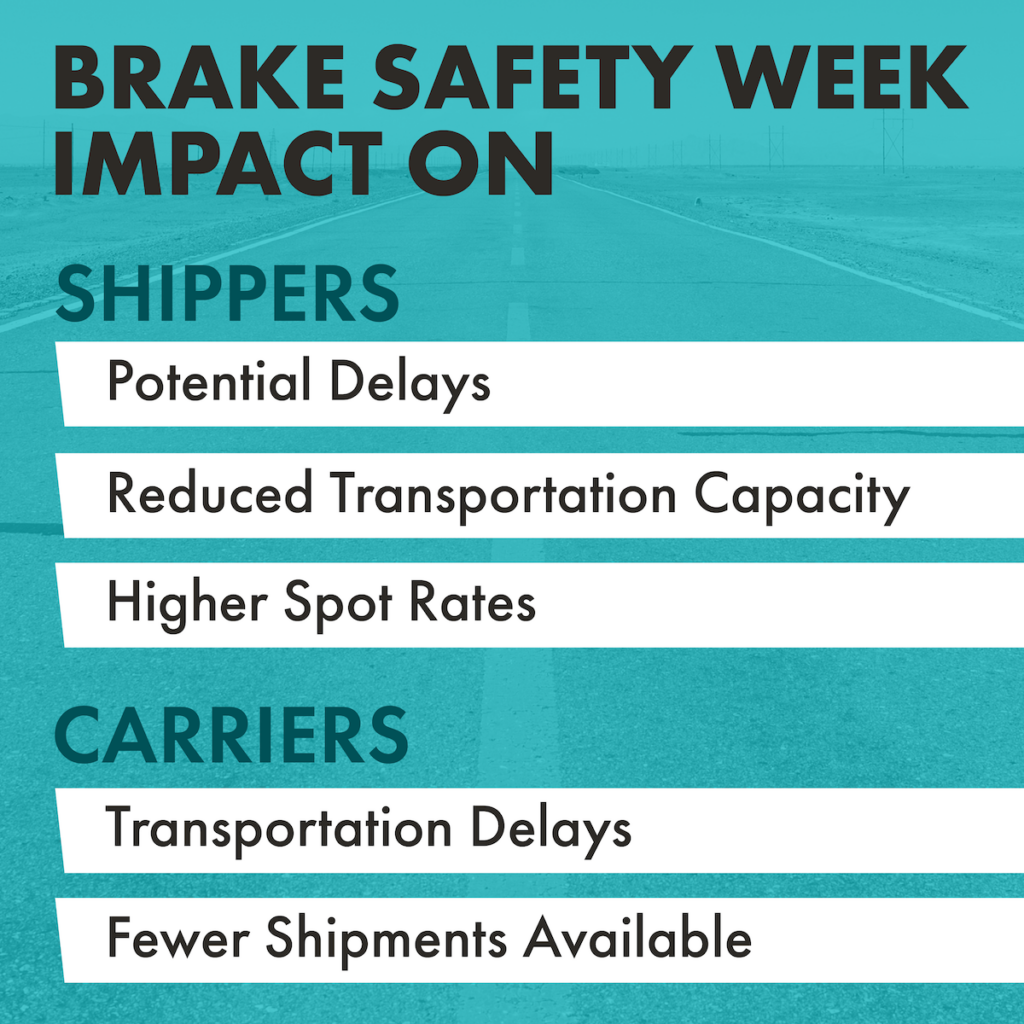
When trucks spend additional time undergoing inspections or are temporarily removed from service for repairs, it can reduce available capacity in certain markets. While these impacts are usually short-lived, they may affect time-sensitive shipments or freight moving through heavily traveled corridors.
Shippers may experience:
- Temporary transportation delays
- Slight reductions in available capacity
- Longer lead times for last-minute shipments
- Short-term spot market fluctuations in some regions
For most businesses, these disruptions are manageable with proactive planning.
The companies that navigate Brake Safety Week most successfully aren’t necessarily changing their entire transportation strategy. They’re communicating earlier, planning ahead, and working closely with trusted logistics partners.
How Brake Safety Week Affects Carriers
Carriers can also feel the effects of Brake Safety Week, particularly if they aren’t prepared for the increased inspection activity.
In addition to the possibility of roadside delays, carriers may experience scheduling challenges, temporary reductions in available freight, and increased scrutiny from inspectors. Staying ahead of routine maintenance and ensuring drivers have the proper documentation can help minimize disruptions.
Common impacts include:
Transportation Delays
Increased inspections can lead to longer wait times at weigh stations and inspection sites. While many inspections are completed efficiently, additional stops may affect delivery schedules and available driving hours.
Temporary Freight Shifts
Some shippers choose to move freight before or after Brake Safety Week to avoid potential delays. This can create short-term fluctuations in freight availability and shipping demand.
Increased Inspection Activity
Drivers should expect a greater likelihood of being selected for inspections throughout the week. Vehicles that are well maintained and inspection-ready are less likely to experience significant delays.
How Shippers Can Prepare for Brake Safety Week
Most shippers won’t need to make major changes during Brake Safety Week. However, a few proactive steps can help reduce the likelihood of service disruptions.
Plan Shipments Early
If you have freight with strict delivery windows, consider booking shipments earlier than usual. Giving your logistics provider additional lead time creates more flexibility if capacity tightens or inspections cause delays.
Verify Shipment Documentation
Incomplete or inaccurate paperwork can create unnecessary delays at any time of year. Before your shipment moves, confirm that bills of lading, addresses, commodity descriptions, and special instructions are complete and accurate.
Communicate Time-Sensitive Freight
If a shipment has appointment times, production deadlines, or customer commitments tied to delivery, communicate those requirements as early as possible.
The more visibility your logistics provider has, the more effectively they can plan routing and carrier selection.
Build Flexibility Into Your Transportation Plan
While most freight continues moving without issue during Brake Safety Week, flexibility is valuable if conditions change.
Depending on your shipment, that could include:
- Adjusting pickup dates
- Considering alternate routes
- Exploring different transportation modes
- Building additional transit time into customer expectations
Stay Connected With Your Logistics Provider
Transportation conditions can change quickly during industry-wide inspection events.
Working with a logistics provider that proactively monitors shipments and communicates updates helps reduce surprises and keeps everyone aligned if adjustments become necessary.
How Carriers Can Prepare for Brake Safety Week
Brake Safety Week shouldn’t require a last-minute scramble. Fleets that prioritize preventive maintenance throughout the year are generally well positioned for inspection week.
Still, taking a few extra steps before August 23 can help drivers avoid unnecessary delays.
Review Vehicle Maintenance Records
Confirm that tractors and trailers have completed scheduled preventive maintenance and that any outstanding brake-related repairs have been addressed.
Pay particular attention to brake drums, rotors, linings, and adjustment.
Verify Driver Documentation
Drivers should have all required documents readily available, including:
- Commercial driver’s license (CDL)
- Vehicle registration
- Insurance information
- Operating authority, when applicable
- Required permits and endorsements
Having documentation organized can help inspections move more efficiently.
Prepare Drivers for Inspections
Drivers should know what to expect during roadside inspections and understand proper procedures when interacting with inspectors.
Reviewing inspection expectations ahead of time can reduce stress and improve inspection efficiency.
Inspect Equipment Before Dispatch
Conduct thorough pre-trip inspections with additional attention given to brake components.
Identifying potential issues before a vehicle leaves the yard is far less disruptive than discovering them during a roadside inspection.
Communicate Early and Often
If delays occur, proactive communication makes a significant difference.
Drivers should know who to contact if inspections affect delivery schedules, while dispatchers should keep customers informed about any changes as quickly as possible.
Safety Benefits Everyone
It’s easy to focus on the operational impacts of Brake Safety Week, but the purpose of the initiative is much bigger than temporary transportation disruptions.
Properly functioning brakes help prevent crashes, protect drivers, and make the roads safer for everyone, including the families sharing the highway with commercial vehicles every day.
Brake Safety Week also serves as a valuable reminder that preventive maintenance isn’t just about compliance. It’s about protecting people, equipment, and the reliability that customers depend on.
Keep Freight Moving During CVSA Brake Safety Week 2026
CVSA Brake Safety Week is an important reminder that safe equipment and proactive planning go hand in hand.
While the increased inspection activity may create temporary transportation challenges, it’s ultimately designed to make North America’s highways safer for drivers, carriers, and everyone sharing the road.
For shippers, the best approach is simple: plan ahead, communicate early, and work with a logistics partner who can adapt when conditions change.
At Trinity Logistics, that’s what we do every day.
Whether it’s navigating seasonal capacity shifts, severe weather, inspection weeks, or unexpected disruptions, our Team helps businesses keep freight moving with proactive communication, flexible transportation solutions, and real people who are invested in your success.
Shipping During Brake Safety Week?
If you have freight moving during CVSA Brake Safety Week 2026, now is the time to start planning.
Our Team can help you:
- Secure reliable transportation capacity
- Plan around potential disruptions
- Build contingency plans for time-sensitive freight
- Stay informed with proactive shipment updates from pickup to delivery
Request a free freight quote today. We’ll keep your freight moving, no matter what week it is.
Shippers: Request a Free Quote Carriers: Find an Available Trinity Shipment Join Our Email List to Stay in the KnowSummer should be a profitable time for food manufacturers and retailers, but cold chain shipping failures come with a cost. Unfortunately, they’re also more likely to occur during this season.
Demand spikes as consumers stock up for summer cookouts, holiday weekends, and events. At the same time, food shippers face higher temperatures, tighter capacity, and increased pressure across the transportation network.
Under those conditions, even routine disruptions can create bigger problems than expected. A small temperature deviation, delayed loading appointment, or poor carrier communication about a breakdown can quickly put product integrity and customer commitments at risk.
One rejected load can impact far more than the value of the product itself. Retailer penalties, replacement shipments, expedited freight costs, and strained customer relationships can all follow.
The good news is that many of the most common summer cold chain shipping failures are preventable when you know what mistakes to avoid.
The Real Cost of Summer Cold Chain Shipping Failures
With cold chain shipping, most think that the only risk is spoiled product. But the actual risk is much larger than that.
A rejected load can create a chain reaction that affects many teams across the business.
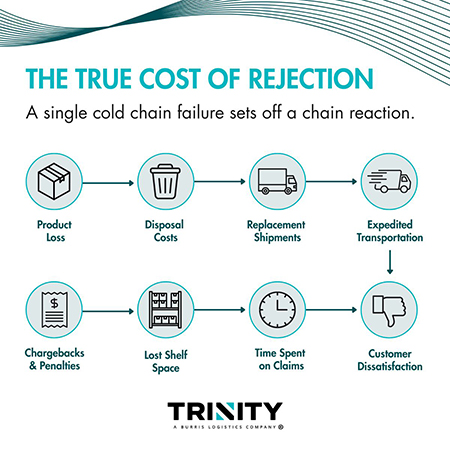
If the shipment was intended for a major sales period, like during summer, the impact can be even greater. The financial loss tied to a cold chain shipping failure rarely is just the value of the freight itself. It goes as far as impacting your company’s bottom line.
Why Summer Creates More Risk for Food Shippers
Heat is just one piece of the puzzle during the summer freight shipping season.

Capacity Competition
During summer, more commodities need temperature control than usual. Overall freight demand also increases. Reefer capacity tightens and pushes rates up an average of 10 – 30% higher.
Holiday Shipping Surges
There are several holidays taking place this time of year, with the most known being July 4th. This holiday historically has driven rates up 8 – 12% above market average.
More Weather-Related Disruptions
Summer doesn’t just bring the heat but severe weather conditions as well. Hurricanes, tornadoes, wildfires, and severe thunderstorms all increase this time of year, often creating delays or the need to reroute shipments.
Tighter Retail & Delivery Windows
Retailers often tighten appointment schedules during summer demand spikes to keep shelves stocked and inventory moving.
Longer Loading & Unloading
Warehouses and distribution centers are handling more volume, which can increase loading times and create congestion at critical points in the supply chain.
As the summer challenges stack up, maintaining product integrity only becomes more difficult, more expensive, and more time-consuming for food shippers.
Don’t let your business get behind this summer.
Lock in reliability now with a free quote.
Quote my next shipment5 Preventable Cold Chain Shipping Mistakes Costing Food Shippers Every Summer
Mistake 1: Focusing on Trailer Temperature Instead of Product Temperature
Many temperature-related claims actually start before a shipment even leaves the facility.
Improper product pre-cooling, warm product entering the trailer, excessive dock exposure, or long loading times are all common offenders. Even when a reefer trailer is operating correctly, product quality can already be compromised.
Protecting product quality starts inside the facility. Consistent temperature checks and disciplined loading procedures are critical to prevent problems.
Mistake 2: Prioritizing Capacity Over Carrier Quality
When freight demand increases, finding available trucks is more difficult.
That pressure can lead shippers to focus on simply securing capacity fast and at the right price. Rather than fully evaluating who is moving the freight. It’s an easy, human mistake to make. But one that can quickly create larger issues if ignored.
Inexperienced or poorly vetted carriers increased the likelihood of:
- Temperature deviations
- Missed appointments
- Communication gaps
- Service failure
- Cargo theft/fraud
Even when the pressure is on, you must be diligent in your carrier vetting. Focus on those with food-grade trailers and temperature-controlled expertise to haul your product. Not taking the time to vet or going with the cheapest rate can cause more costly and time-consuming problems down the road. The extra time and slightly higher rate are worth it.
Mistake 3: Understanding the Impact of Dwell Time
One of the most overlooked risks in cold chain shipping is time spent standing still.
Products can sit at shipper facilities, distribution centers, and receiver locations longer than expected when operations become congested. During the summer months, those delays become consequential. The longer a shipment waits, the greater risk for temperature exposure, appointment issues, and downstream service disruptions.
To stay on top of dwell times, keep track of them with your carriers. Make sure to coordinate appointments closely and proactively address any delays in operations before they impact your shipments.
Mistake 4: Operating Without Real-Time Visibility
Many cold chain shipping failures aren’t discovered until it’s too late to fix them.
Without real-time visibility, equipment issues, delays, and temperature concerns can go unnoticed until they become much bigger problems. By then, your options may be limited.
Working with a logistics partner that provides shipment tracking and proactive communication gives you a better chance to address issues early and keep freight moving as planned.
Looking to optimize transportation performance and protect your bottom line?
Get a complimentary supply chain analysis and discover the inefficiencies you may be missing in your day-to-day visibility.
Find my inefficienciesMistake 5: Treating Claims Prevention as an Afterthought
Too many organizations focus on claims resolution rather than claim prevention.
Unfortunately, by the time a load is rejected, most recovery options are already limited.
The most successful food shippers focus on prevention.
They regularly review claims data to uncover recurring issues. Look for temperature deviations, carrier performance concerns, appointment delays, or loading inconsistencies. Those insights can help strengthen processes, improve communication, and reduce the likelihood of future claims.
Having a documented claims process is equally important. When issues do occur, clear procedures helps teams respond faster and keep disruptions to a minimum.
Every rejected load is an opportunity to learn something. The goal isn’t just to resolve the claim. It’s to prevent the same issue from happening again.
Summer Cold Chain Shipping Readiness Checklist
Before summer demand reaches its highest point, run through this checklist of questions:
Transportation Readiness
- Have carrier partners been vetted for cold chain expertise?
- Do we have backup transportation options?
- Have we reviewed carrier performance from previous summers?
Product Protection
- Are products being pre-cooled properly?
- Are loading and unloading procedures documented?
- Are temperature requirements clearly communicated?
Visibility & Communication
- Can we identify in real time?
- Do all stakeholders know who to contact when issues arise?
- Do we have visibility into shipment status throughout transit?
Risk Management
- Do we have a claims prevention strategy?
- Are contingency plans in place for weather or capacity disruptions?
- Have we reviewed lessons learned from previous peak seasons?
What Leading Food Shippers are Doing Differently
The most successful food shippers prepare for summer before demand reaches its peak.
They secure reliable capacity early, monitor carrier performance, and identify areas where delays are most likely to occur. They invest in visibility, build contingency plans, and use past challenges to improve future performance.
When summer demand picks up, preparation can make all the difference. Companies that plan ahead spend less time putting out fires and more time keeping products moving to their customers.
How Trinity Helps Food Shippers Reduce Summer Cold Chain Risk
Many of the challenges that come with summer cold chain shipping are difficult to manage alone. Transportation teams must juggle capacity, carrier performance, customer expectations, facility delays, and shipment visibility every day.
That’s where Trinity can help.
We work with food shippers to secure reliable temperature-controlled capacity, improve shipment visibility, provide proactive updates, and address issues before they turn into bigger problems.
Customers get one dedicated point of contact, access to a large network of vetted carriers, real-time tracking, and support whenever they need it. Backed by more than 45 years of transportation experience, our Team helps keep cold chain shipments moving safely and efficiently.
Summer Success Starts Before the Problems Show Up
Summer doesn’t have to mean rejected loads, claims, delayed deliveries, or unhappy customers.
The most successful food shippers prepare before problems happen. They identify risks early, strengthen their transportation processes, and work with trusted logistics partners to keep products moving throughout the season.
Feeling the Pressure of Summer Demand?
If you’re preparing for higher volumes, tighter capacity, or increased cold chain risk this summer, Trinity can help.
Get a quote for your next shipment and see how our team can help keep your freight moving.
Quote My Next ShipmentFreight planning should begin long before peak season shipping chaos arrives.
By late May, back-to-school demand, holiday prep, and seasonal food shipping all start competing for space.
That usually means tighter capacity, shifting demand, and more pressure on delivery schedules. A challenge for shippers is that often by the time their transportation teams feel the pressure, some of the best carrier capacity has already been committed.
Just one missed delivery can lead to empty shelves, chargebacks, unhappy customers, and higher freight costs.
If rates are climbing and appointment windows are shrinking, peak season has probably already clocked in.
The good news? A solid freight planning and logistics strategy can help keep your supply chain moving smoothly before the real holiday rush hits.
Why Peak Freight Planning Matters More Than Ever
Retail and food supply chains are dealing with more pressure from every direction during this time. Costs continue rising, and truckload and refrigerated space becomes harder to secure. Retailers are also enforcing stricter OTIF requirements, appointment windows, and chargeback policies.
Customer expectations are also higher. Shelves need to stay stocked, and deliveries need to arrive faster than ever.
When freight is late, the impact can show up across inventory, sales, labor planning, and customer satisfaction.
For transportation teams already working with tighter timelines and limited visibility, reactive planning leaves very little room for error.
The longer teams wait to plan, the fewer options they have when capacity tightens or disruptions happen.
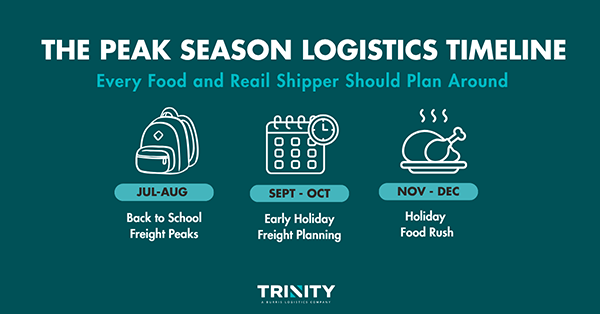
The Peak Season Timeline Every Food and Retail Shipper Should Plan Around
May – July: Produce & Back-to-School Freight Peaks
Produce season and back-to-school kicks off the start of peak season shipping pressure. Retail inventory ramps up for school supplies, apparel, electronics, grocery products, and snacks as families shift into “everything all at once” mode.
During these few months, dry van and refrigerated freight both get harder to secure as carriers prepare for heavier fall demand. Freight starts getting competitive long before most people are thinking about the holidays.
September – October: Early Holiday Freight Planning
Holiday shipping starts earlier every year, with some inventory moving as early as August. Food and beverage shippers also begin preparing for increased seasonal demand heading in Q4.
Retailers also tighten appointment schedules and inventory deadlines during this period.
For many transportation teams, this is the point where flexibility really starts disappearing. Carrier availability becomes more competitive, appointment schedules tighten, and recovering from delays gets more expensive.
Even small delays can snowball into bigger disruptions later in the season.
November – December: Holiday Food Rush
By November, holiday food shipping hits full speed.
Demand rises for candy, frozen food, beverages, baking products, and other seasonal inventory.
At the same time, refrigerated freight capacity becomes even tighter as retail shipping volumes peak.
Teams that wait too long to secure backup capacity may end up paying more to move freight.
Missed delivery windows become more expensive, and last-minute freight solutions become harder to secure.
What Can Go Wrong During Peak Shipping Season
Peak season problems tend to pile up fast. One delayed shipment can quickly lead to:
- Missed retailer delivery windows
- Empty shelves and stockouts
- Unfilled customer orders
- Expensive expedited freight costs cutting into margins
- Reduced shipment visibility and delayed communication
- Carrier capacity shortages
- Chargebacks, penalty fees, and OTIF failures
- Strained retailer and supplier relationships
- Increased pressure on internal transportation teams
During peak season, even small upsets can lead to bigger problems across inventory, store performance, and customer satisfaction.
The most expensive peak season problems often aren’t caused by a single disruption. They’re caused by not having a plan in place before the disruption happens.
If your team spent last peak season reacting instead of planning ahead, now’s the time to rethink the strategy before the next freight rush hits.
Get Ahead of the Peak Season Curve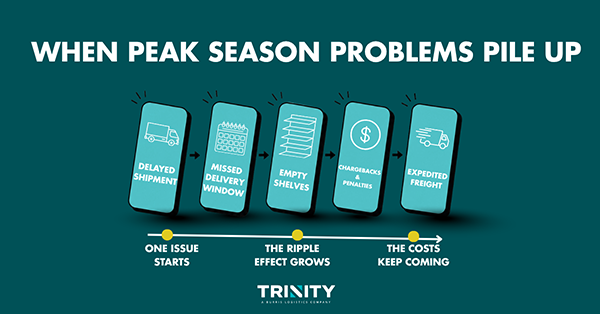
Checklist: Are You Already Behind on Peak Season Freight Planning?
If any of the following sound familiar, now may be the time to revisit your transportation strategy:
- Carrier commitments haven’t been finalized
- Backup routing options haven’t been identified
- Retail compliance requirements haven’t been reviewed recently
- Shipment visibility gaps still exist
- Forecasts haven’t been updated to reflect changing demand
- Contingency plans haven’t been documents
The earlier these gaps are addressed, the more flexibility your team typically has when demand starts climbing.
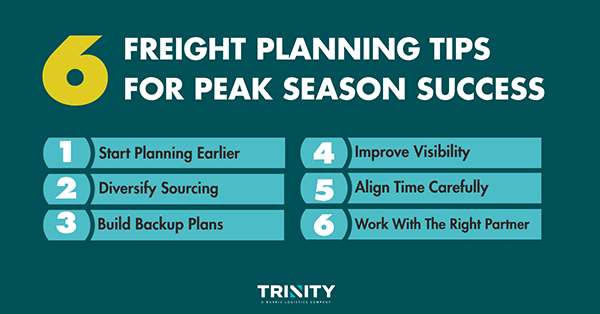
6 Freight Planning Tips for Peak Season Logistics
1. Start season planning earlier
Peak season planning should start months before holiday demand hits full speed.
Waiting until capacity becomes a problem will mean fewer carrier options at a much higher rate.
Early forecasting is becoming increasingly important as consumer spending patterns continue shifting. Static forecasting alone is no longer enough during peak retail and food shipping seasons.
More teams are using real-time data and AI tools to track changes in demand. Better forecasting can help secure capacity, control costs, and reduce disruptions.
But forecasting is only part of the equation. Cross-functional planning is just as important. When procurement, inventory, sales, production, and transportation teams are aligned, its easier to spot potential bottlenecks before peak season demand arrives. Better communication early on can prevent surprises later.
2. Reduce risk with diversified sourcing
Relying too heavily on a single supplier, sourcing region, or transportation route can quickly create challenges, especially as tariff policies, geopolitical events, and supply chain disruptions continue to evolve.
Diversifying suppliers, manufacturing locations, ports of entry, and transportation routes can create greater flexibility and resilience, helping businesses adapt more quickly when conditions change and keeping freight moving during peak season.
3. Build backup plans before you need them
Peak season rarely goes exactly according to plan.
Weather delays, capacity crunches, and routing disruptions are just a few challenges that are bound to happen when shipping volumes spike.
That’s why it helps to diversify carriers, transportation modes, and routing options before problems happen.
It is also important to have communication plans in place. When suppliers, carriers, customers, and internal teams know how disruptions will be handled, it’s easier to respond quickly and keep freight moving.
Waiting until freight is already delayed leaves very few good options.
A little flexibility now can save a lot of stress later.
4. Improve visibility across your supply chain
Real-time shipment visibility helps reduce surprises during peak season. Faster updates and better communication allow teams to respond to delays before they turn into bigger problems.
Today, visibility is more than just tracking freight. Real-time updates help transportation teams spot potential issues sooner, make better decisions, and adjust plans before delays impact customers. Predictive tools can also help identify problems early, giving teams more time to respond and keep freight moving.
As retailer appointment windows and OTIF requirements get tighter, visibility becomes even more important for keeping freight moving smoothly.
Need More Visibility and Control During Peak Season?
As freight volumes grow and retailer requirements get stricter, transportation teams have more to manage each day.
Trinity’s Managed Transportation solutions help shippers improve visibility, streamline coordination, and stay ahead of disruptions before they impact service.
Learn About Trinity's Managed Transportation ->5. Align inventory and delivery timing carefully
During peak season, timing is CRUCIAL.
Early deliveries can create storage and congestion issues, while late deliveries can lead to stockouts, missed sales, and unhappy retailers. Finding the right balance helps keep inventory flowing without unnecessary headaches.
Delivering at the right place matters just as much as delivering on time. Coordinating deliveries around retailer schedules and warehouse capacity can help prevent delays and costly compliance penalties.
6. Work with a logistics partner that can scale with demand
Peak season moves fast, and flexibility matters. Working with a logistics partner that offers access to larger carrier networks, multiple transportation modes, and backup support can help your team adapt when demand suddenly spikes.
Beyond capacity, experienced logistics providers can offer valuable market insights, transportation expertise, and contingency planning support. Those insights can help businesses make faster decisions and stay ahead of the ever-changing conditions of peak season.
Why Food and Retail Shippers Turn to 3PLs During Peak Season
Peak season logistics strategy takes more than just finding trucks. As demand rises and capacity tightens, many food and retail shippers turn to 3PLs for added flexibility, visibility, and operational support.
In fact, 87% of shippers say they increase their use of outsources logistics services during challenging market conditions. A strong 3PL relationship can help transportation teams secure capacity faster, improve communication, and avoid costly last-minute decisions when peak season pressure builds.
At Trinity Logistics, we help shippers stay ahead of seasonal demand with scalable capacity, multimodal solutions, and a carrier network built to flex when things get busy.
Stay Ahead of Peak Freight Season
Peak season shipping will always bring pressure, but the right preparation can help keep your supply chain stable when demand starts climbing.
The transportation teams with the most options during peak season are usually the ones that start planning before capacity gets tight – not after.
At Trinity Logistics, we help food and retail shippers navigate seasonal volatility with reliable capacity, real-time visibility, flexible transportation options, and proactive support when it matters the most.
Whether you’re evaluation carrier coverage, preparing for retail compliance requirements, or simply looking to strengthen your transportation strategy before demand spikes, having the right partner in place can make a meaningful difference in your bottom line.
Prepare for Peak Season with Reliable Truckload Capacity
Peak season success often comes down to having the right transportation network in place before demand surges.
Learn how Trinity’s truckload solutions help food and retail shippers secure capacity, improve visibility, and stay ahead of seasonal disruptions.
Explore Trinity's Truckload ServicesEvery year, CVSA Operation Safe Driver Week creates ripple effects throughout the transportation industry. While the initiative is designed to improve roadway safety, increased enforcement activity can also affect shipments, driver availability, and market conditions.
From July 12-18, 2026, law enforcement agencies throughout the United States, Canada, and Mexico will participate in this annual campaign led by the Commercial Vehicle Safety Alliance (CVSA). During this week, officers will increase traffic enforcement efforts and focus on identifying unsafe driving behaviors among both commercial and passenger vehicles.
Whether you’re a shipper managing customer expectations or a carrier preparing drivers for increased roadside scrutiny, understanding what to expect can help minimize disruptions and keep freight moving efficiently.
Key Takeaways
- CVSA Operation Safe Driver Week runs July 12 – 18, 2026.
- Law enforcement agencies across North America will increase roadside traffic enforcement.
- This year’s focus is on reckless, careless, and dangerous driving behaviors.
- Increased inspections and enforcement can temporarily impact freight capacity and transit times.
- Shippers and carriers that plan ahead can reduce disruptions and keep freight moving.
Table of Contents
- What is Operation Safe Driver Week?
- Why Operation Safe Driver Week Matters to Shippers
- How Carriers Can Prepare
- How Shippers Can Prepare
- FAQs
What is Operation Safe Driver Week?
In partnership with the Federal Motor Carrier Safety Administration (FMCSA), the CVSA launched the Operation Safe Driver initiative in 2007. The goal of this initiative is to reduce the number of deaths and injuries from crashes involving large trucks, buses, and cars.
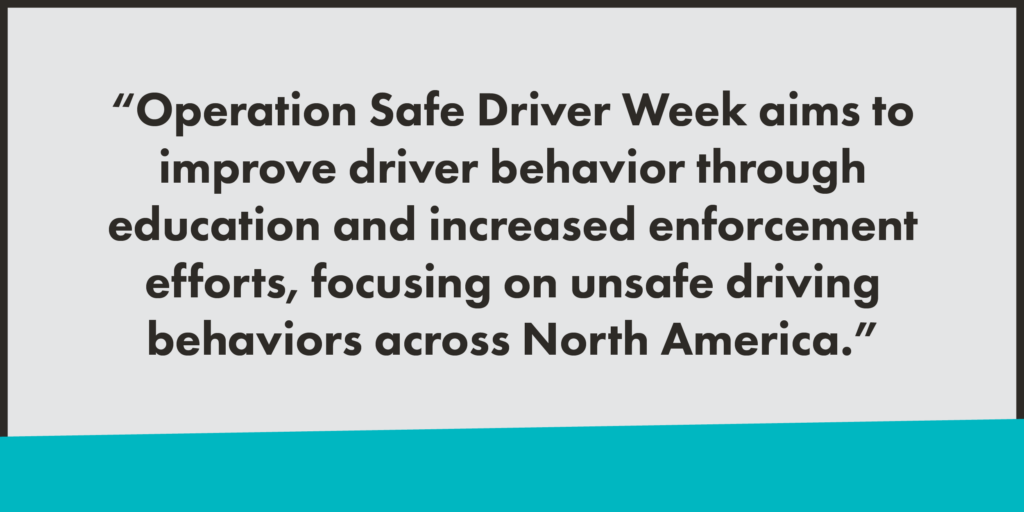
This initiative includes the annual event, Operation Safe Driver Week. The program aims to improve driver behavior through education and increased enforcement efforts, focusing on unsafe driving behaviors. It takes place across North America, so the U.S., Canada, and Mexico. Unlike the CVSA’s other two initiatives (International Road Check and Brake Safety Week), which solely focus on commercial drivers, this event affects all drivers on the road.
Each year focuses on reckless, careless, or dangerous driving. This includes actions like:
- Speeding
- Texting while driving
- Drunk or drugged driving
- Following too closely
- Driving too aggressively
- Improper lane changes
- Failure to obey traffic control devices
- Failing to use a seat belt
Those drivers identified are pulled over by law enforcement and issued warnings or citations.
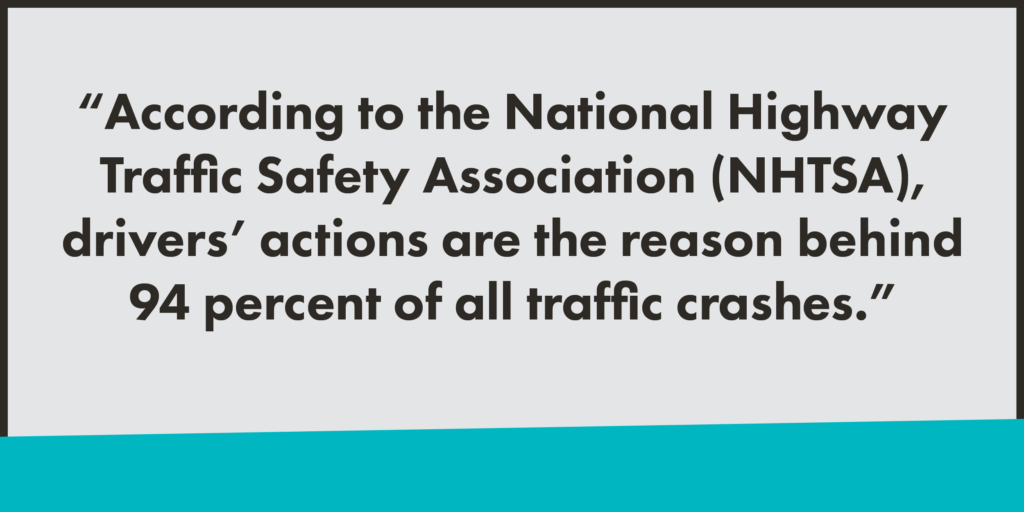
According to the National Highway Traffic Safety Association (NHTSA), drivers’ actions are the reason behind 94 percent of all traffic crashes. Research from the University of Missouri-Columbia has shown that interactions with law enforcement, not just education, are what brings change. During last year’s event, law enforcement interacted with 66,421 drivers! Drivers were informed and educated on how they can improve their driving behavior and do their part in reducing crashes.
Why Operation Safe Driver Week Matters to Shippers
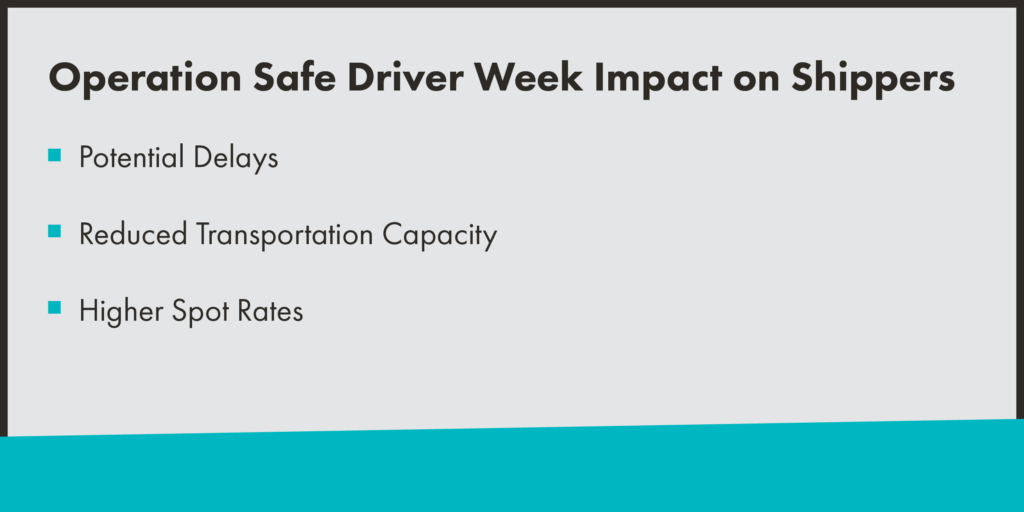
While the initiative focuses on driver safety, it can also influence transportation operations and supply chains. During the enforcement period, drivers may encounter:
- increased traffic stops
- longer roadside interactions
- delays caused by enforcement activity
- reduced driving productivity
- route disruptions in heavily monitored areas
As a result, some markets may experience temporary capacity constraints or minor fluctuations in spot rates. Shippers may also see an increase in shipment delays.
How Carriers Can Prepare for Operation Safe Driver Week
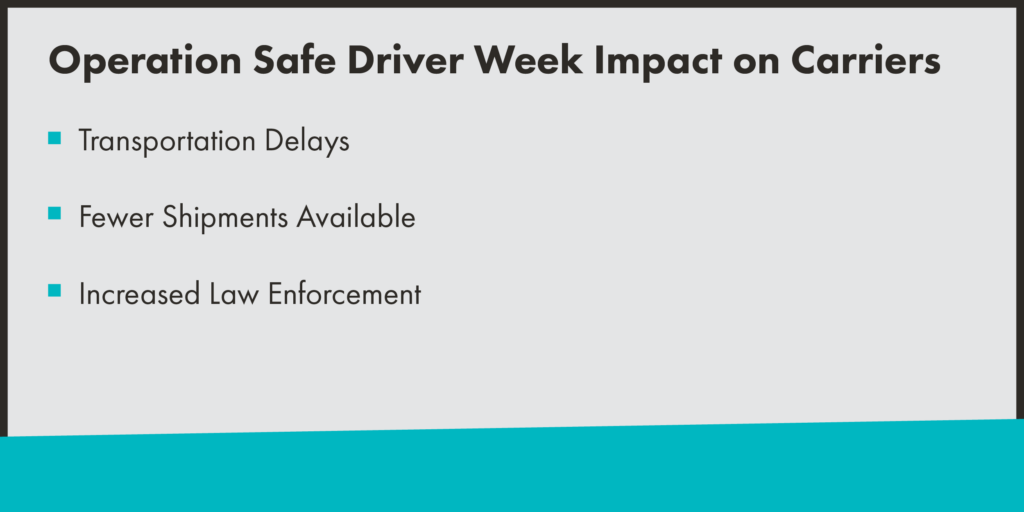
Carriers are similarly affected, and there is the potential for delays, less freight volume, scheduling challenges, and higher scrutiny from law enforcement.
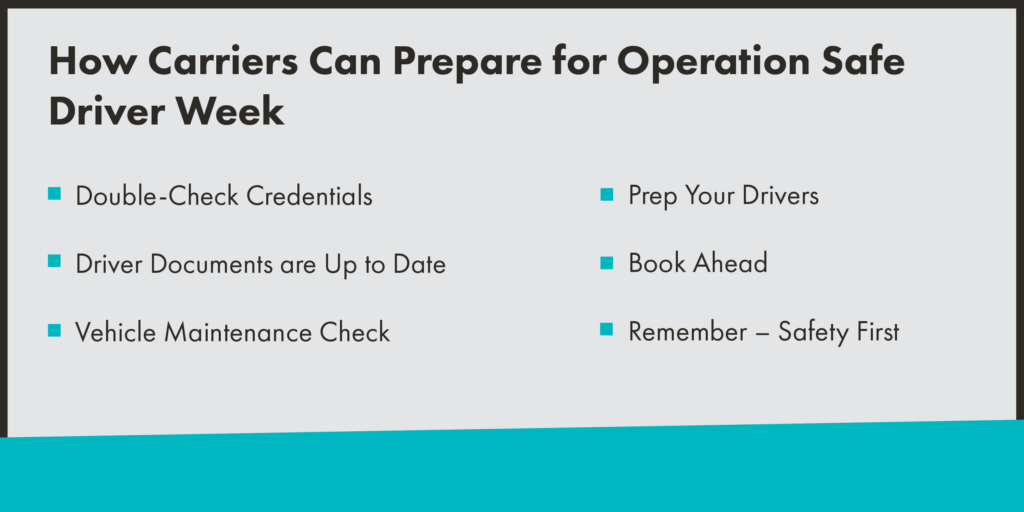
Double-Check Credentials
Ensure all company credentials, like operating authority, hazmat endorsements, TWIC cards, and any other relevant permits, are current and accessible.
Driver Documents are Up to Date
Have drivers verify that all paperwork is up to date and accessible in case of inspection.
Vehicle Maintenance Check
Double-check that all vehicles have undergone any necessary preventive maintenance and are in top operating condition to avoid delays due to roadside repairs.
Prep Your Drivers
Make sure drivers are aware of this week and the potential for stops or delays. Train drivers on proper procedures for interacting with law enforcement. Make sure they know the channels to communicate any disruptions to their journey.
Book Ahead
Shippers may choose to reroute shipments, choose alternative modes, or plan around this week. Consider booking shipments well in advance for this week.
Remember – Safety First
The importance of this week is not disruptions but road safety. This is a great time to talk with drivers about safe driving behavior. You could also help educate the public on proper driving behavior when interacting with trucks. Remember, this week benefits everyone who shares the road.
How Shippers Can Prepare for Operation Safe Driver Week
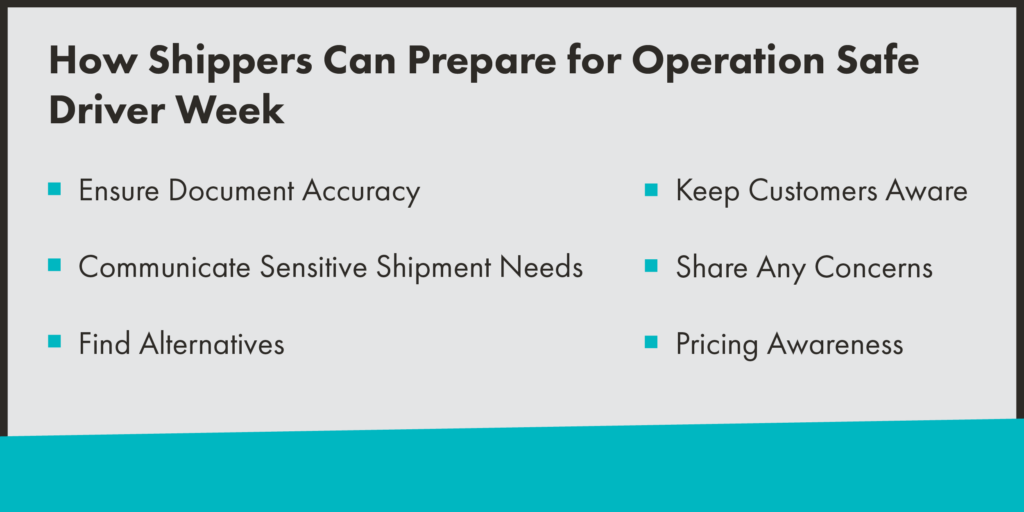
Shippers can also take proactive steps to reduce potential service disruptions.
Ensure Documentation Accuracy
Double-check all shipment documentation. Ensure it is accurate and complete to avoid delays during any unexpected inspections.
Communicate Sensitive Shipment Needs
If you have any special requirements or time sensitivities, communicate this well in advance. This helps your logistics provider plan effectively. Any last-minute communication risks delays.
Find Alternatives
Consider alternative transportation modes or routes if you expect any delays.
Keep Customers Aware
Be proactive and communicate potential delays during this week to your customers to manage expectations.
Share Any Concerns
Discuss any concerns you might have with your logistics provider. They can offer valuable insights and help develop strategies to reduce disruptions.
Pricing Awareness
Be aware of possible higher spot rates during Operation Safe Driver Week. When possible, plan shipments before or after this period to secure better pricing.
Why Roadway Safety Remains a Priority
CVSA continues to emphasize the importance of reducing dangerous driving behaviors because of their direct connection to roadway fatalities.
According to the CVSA, speeding contributes to nearly one-third of all traffic fatalities each year, making it one of the leading causes of preventable roadway deaths.
Operation Safe Driver Week is designed to improve awareness, encourage accountability, and ultimately create safer roadways for everyone.
Let’s Work Together to Keep Our Roads Safe
We believe road safety is paramount. While Operation Safe Driver Week might cause some temporary disruptions, it serves a vital purpose in promoting safe driving behaviors.
By staying informed and taking proactive steps, you can likely see minimal effects of Operation Safe Driver Week.
For additional opportunities to stay ahead of disruptions during Operation Safe Driver Week, consider partnering with Trinity Logistics. Our Team helps shippers navigate capacity challenges, market fluctuations, and transportation disruptions through customized freight solutions and proactive communication.
FAQs
Operation Safe Driver Week takes place July 12–18, 2026, across the United States, Canada, and Mexico.
This year’s focus is reckless, careless, and dangerous driving behaviors, including speeding, distracted driving, aggressive driving, and following too closely.
In some markets, increased enforcement activity can temporarily impact driver productivity, available capacity, and transit schedules.
Carriers should review driver documentation, conduct maintenance checks, reinforce safety expectations, and communicate enforcement expectations with drivers.
Shippers can prepare by communicating shipment priorities early, ensuring documentation accuracy, and planning for potential delays.
Transportation management plays a larger role in your business success than most people expect.
On the surface, things can look fine because orders move, customers get what they need, and everything looks to be on track.
But when your business starts growing, things begin to shift. While it looks like everything is working as it should, you may notice leadership often starts to feel uneasy. Freight decisions feel fragmented, reactive, and take longer. And it seems like issues start to surface more often than they should.
That’s because growth increases the complexity of your logistics operations. As business scales, your transportation management stops being just an operational function and something that quietly demands more attention, time, and involvement than was previously required by your team.
When most companies hit this stage, they often respond by looking for better tools, but the real issue usually isn’t the tools you’re using. It’s the model behind it.
Why Managing Transportation Feels More Difficult as You Grow
As your business starts to scale, your freight volumes increase, operations expand, and decision-making tends to spread across teams and locations, becoming decentralized. Visibility often fragments, too, so it gets harder to see how everything connects altogether.
Costs start getting accepted rather than actively managed, and while data exists, it doesn’t always lead to clear decisions. Before long, leaders find themselves pulled into operational issues they shouldn’t have to solve.
It doesn’t happen all at once. It breaks down slowly, over time, and that’s what makes it so easy to overlook.
The Hidden Costs of Choosing the Wrong Transportation Model
Most companies evaluate transportation management solutions based on freight cost, but the real impact shows up elsewhere.
Rather than cost savings, what you should be focusing on is cost avoidance. For example, when a customer order takes longer to deliver than expected, or when your team is spending hours solving issues that could have been prevented. It shows up in inconsistent service experiences and distracted leadership.
These examples may not always appear on a report, but they affect your performance every day.
Because your biggest financial risk isn’t overspending. It’s not knowing what inefficiencies are quietly limiting your business growth and long-term success.
The 3 Most Common Transportation Management Approaches (And Why They Don’t Work)
When companies try to improve transportation management, they typically rely on one of these 3 approaches:
In-House Transportation Management
| PROS | CONS |
| Familiarity Sense of control Decisions stay internal | Doesn’t scale well More dependent on individual knowledge and effort Information can stay siloed Scaling requires adding more pressure to your team |
This approach offers familiarity and a sense of control. Your team understands your business, and decisions stay internal.
But as operations grow, the model becomes more dependent on individual knowledge and effort. Processes can vary; information can stay siloed, and scaling often requires adding more pressure to your team.
Technology-Only (TMS First)
| PROS | CONS |
| Visibility Automation | Adoption can be slow Added IT burden Can end up adding complexity |
This approach focuses on gaining visibility and automation through a transportation management system (TMS).
The challenge is that software alone doesn’t run your transportation operation.
Without clear ownership and structured processes behind it, adoption is slow, and teams begin working around the system. What was intended to simplify operations can end up adding complexity and added IT burden.
Fragmented Outsourcing Using Multiple Providers
| PROS | CONS |
| Flexibility | Siloed visibility Inconsistent service Poor accountability Decentralized decisions |
This approach offers flexibility by using multiple providers across lanes and modes.
Over time, however, flexibility can lead to inconsistency. Visibility becomes fragmented, decisions become decentralized, and accountability becomes harder to define.
These Approaches Force Tradeoffs
Each of these approaches addresses part of the problem, but none of them solve it entirely.
As a result, companies often feel like they have to choose between priorities that should work together. They gain scale but lose consistency or improve visibility but add operational burden.
That’s not an effective long-term transportation management strategy. It’s just a series of compromises. And unfortunately, most providers are built around those same limitations, forcing you into tradeoffs.
What an Optimal Transportation Management Model Should Look Like
Companies that manage transportation well take a different approach. Instead of focusing on individual tools or providers, they focus on how the operation runs as a whole.
They use a model where execution is owned, decisions are structured, and visibility leads to action. One accountable model built for scalability, not just activity. And no tradeoffs.
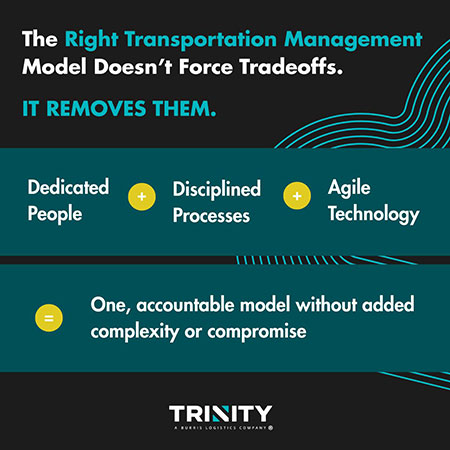
The 3 Elements That Make Trinity’s Managed Transportation Model Work
At the center of Trinity’s model are 3 main elements working together.
People
A dedicated Team of experts that manages execution day to day, oversees carrier performance, capacity, and exceptions, addressing any issues before they escalate.
+
Process
A consistent framework offering governance for effective decision-making, with clear workflows and accountability that bring structure to the operation. You gain visibility that actually leads to impactful action.
+
Technology
Tools that enable and support visibility, automation, and insight, without creating additional complexity or burden for your team.
=
A Model Without Tradeoffs
On their own, each of these helps. But when they work together, transportation management becomes far more effective and scalable.
How to Evaluate a Potential Transportation Management Provider
If you’re evaluating transportation management providers, the most important questions aren’t about features. They’re about how your operation will function.
Consider asking:
- Who owns execution in the day-to-day?
- How are decisions made and managed?
- What happens as business grows and complexity increases? Can the model scale?
- How is performance measured and improved over time?
- How much responsibility stays with your team?
The answers to these questions will tell you whether a provider is offering a tool or a wholistic operating model.
What Transportation Management Success Can Look Like
When the transportation management model is right, the difference is noticeable.
Your logistics operations become more predictable, and visibility becomes something you trust rather than question. Decisions are proactive and able to be made earlier, before small issues turn into larger problems. Growth begins to feel more manageable and less risky.
When your transportation management works well, logistics stops being a constant concern to leadership and starts supporting the bigger picture. Your business gets its confidence back because there are no more limitations inflicted by your logistics.
Choose the Transportation Management Model That Works for You – Not Against You
At some point, every company reaches the same realization – that it’s not down to the transportation management system to use and software alone won’t fix structural inefficiencies.
Instead, it’s about how transportation will be managed moving forward. And if your current (or potential) approach forces tradeoffs, then it’s not built for long-term performance.
That’s why Trinity’s Managed Transportation model was designed to remove those compromises by combining experienced people, disciplined processes, and enabling technology into one accountable operation.
The Result?
- Measurable business outcomes you can trust
- A single source of truth
- The ability to avoid unnecessary costs
- Able to actively manage carrier performance, mode selection, routing guides, and network strategy – every day
- Protection from market volatility
- Fewer costly errors and disputes
- Smarter use of total shipping volume
- Improved margins through operational efficiency
- The ability to protect and improve profitability
- A more reliable customer experience
When transportation runs the way it should, it becomes a competitive advantage rather than a constant challenge.
Quantify the True Cost of Your Logistics Operations
If you’re not sure how your operations are performing beneath the surface, the first place to start is with a closer look at your data. It can reveal how decisions are being made, where inefficiencies exist, and what opportunities you may be missing.
From there, you can decide what needs to change.
If you’re ready to take that step, you can request a free supply chain analysis from Trinity Logistics and see what a better transportation management model could look like for your business.
I WANT A FREE LOOK INTO HOW MY SUPPLY CHAIN IS RUNNINGHurricane Season 2026 is here. Is your supply chain ready for it?
Every year, hurricane season puts supply chains to the test. From June 1st through the end of November, the Atlantics and Gulf Coast face months of weather uncertainty that can quickly impact freight movement and delivery timelines.
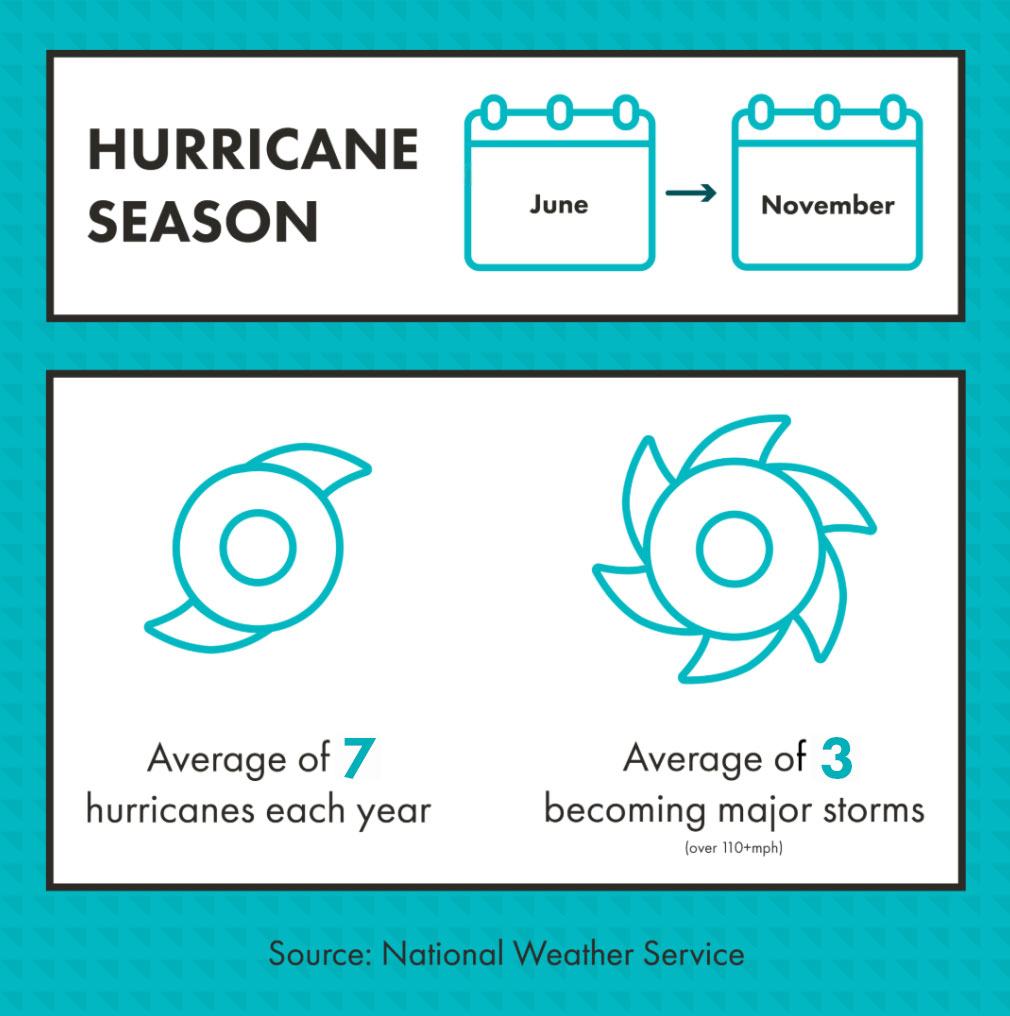
For Hurricane Season 2026, forecasts by The Weather Company and Colorado State University predict below normal activity this year. 12-13 storms are expected with 6 becoming hurricanes, and 2 reaching Category 3 or stronger. The average for hurricane season is 14 expected storms, 7 hurricanes, and 3 major ones.
Looking back at the previous seasons, recent storms like Hurricane Helen and Hurricane Debby caused major supply chain disruption. Flooded roadways, stranded trucks, delayed shipments, and shifted delivery windows are challenges many shippers know all too well.
For supply chains, hurricane season isn’t just a weather event. It’s an operational risk that requires planning, awareness, and the ability to adapt quickly.
Hurricane season or not, freight needs to move. Here’s how to prepare in a way that keeps your business steady, even when conditions aren’t.
Supply Chain Tips for Peak Hurricane Season
Stay Informed
Hurricanes can seriously disrupt even the most well-planned operations. Suddenly, storm paths can shift, change intensity, and tighten timelines. Staying informed gives you more time to respond.
Set up alerts so you’re notified about developing storms or hurricanes. Follow trusted weather sources closely throughout this time of year. Real-time updates will allow you to make decisions earlier, rather than after disruption has began.
Weather Sources to Consider
Maintain Communication
When a storm is approaching, communication matters just as much as planning.
As soon as there’s a potential threat, acknowledge it early and keep your customers and partners in the loop. Even if details are still developing, your communication can help set expectations and build trust.
Share updates on possible delays, rerouting, and recovery timelines as they evolve.
Don’t hesitate to share updates and be honest. Consistency and transparency go a long way during uncertain conditions.
Have an Emergency Plan Ready
An emergency plan should be clear, current, and easy to execute.
It should outline evacuation routes, communication protocols, employee responsibilities, and steps to protect inventory and facilities. Just as important, your team should know how to use it.
Review and update your plan regularly to make sure it still works for your team, your operations, and any new risks that may come up. Running through scenarios ahead of time can make a real difference when decisions need to happen quickly.
Emergency Plan Checklist:
- Evacuation routes
- Crisis communication plan
- Employee roles
- Inventory protection plan
- Emergency supply access
- Facility support procedures
Stay Flexible and Consider Backup Plans
Hurricane season often forces quick changes, throwing a wrench in your usual operations. Having backup options in place makes those changes easier to manage.
This can include repositioning inventory inland, identifying alternative transportation modes, or working with multiple suppliers and logistics partners so you have that diversity when needed. Rerouting becomes more manageable when those paths are already considered ahead of time.
Flexibility is what helps keep your freight moving, even when your original plan no longer works.
If your backup plans still has gaps, now is the time to close them. We can help you build a more flexible, storm-ready supply chain before hurricane season 2026 ramps up.
Get started. Request a quote.ENHANCE VISIBILITY IN YOUR SUPPLY CHAIN
During hurricane season, having visibility in your supply chain can make all the difference.
Thorough tracking tools like transportation management systems (TMS), GPS tracking, IoT sensors, or AI forecasting tools can offer you real-time data to help you understand where your freight is and what risks may be ahead. With better visibility, you can respond faster and make more informed decisions.
Knowing what’s happening across your supply chain gives you a level of control that’s hard to replace.
Discover the visibility gaps your supply chain hasVisibility = Power
Knowing where your freight is, what risks lie ahead, and how to respond gives you the power to act, not react.
BOUNCE BACK FASTER WITH A RECOVERY PLAN
What happens after the storm matters just as much as what happens before it.
According to U.S. Congress, 40% of businesses do not reopen after a disaster. That’s not meant to scare you; it’s a reminder of why planning for recovery helps protect against long-term disruption.
A strong recovery plan includes assessing damage, restoring operations, and reconnecting with suppliers and partners. Having those steps mapped out ahead of time can shorten downtime and help you regain momentum faster.
40 percent of businesses do not reopen after a disaster.
– U.S. Congress
Weather the Storm with a Reliable Logistics Partner
Even with a below normal activity predicted for Hurricane Season 2026, it will still bring its fair share of challenges to the logistics industry. The question is whether your business is going to be prepared for it.
Working with an experienced and trusted logistics partner, like Trinity, gives you added support when conditions become unpredictable. While hurricanes can roll in a cloudy overcast of unknowns, Trinity can be there to shine a light toward safety and security.
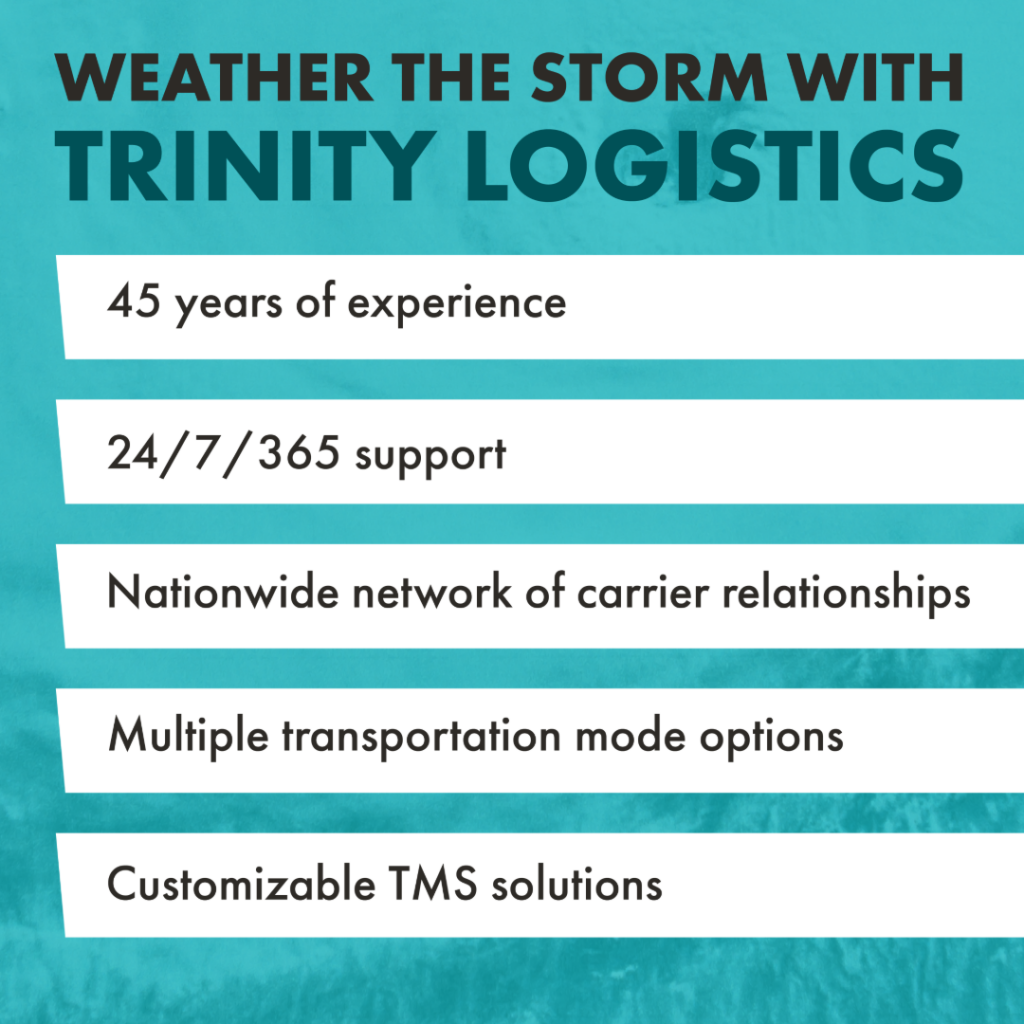
We have 47 years of experience helping thousands of supply chains navigate disruptions, including hurricane season, year after year. Our Team is available around the clock, with a nationwide network of trusted carriers and access to multiple modes of transportation when plans need to change. We focus on keeping communication clear, providing visibility into your freight, and helping you stay one step ahead when it matters most.
With the right preparation and the right logistics partner, you can move through Hurricane Season 2026 with more confidence and less disruption. Don’t wait until a storm is already impacting your operations.
Request a quote today for a more resilient, better-prepared supply chain this hurricane season.
Get started
Sustainable logistics is no longer a “nice to have.” For most businesses, it’s becoming a competitive advantage.
According to the Environmental Protection Agency (EPA), more than 90% of a company’s greenhouse gas emissions often come from its supply chain. In fact, in the U.S., transportation alone remains one of the largest contributors to greenhouse gas emissions. That means the way you move freight matters more than most people realize.

But you’re already balancing rising costs, capacity ups and downs, the pressure of customer demands, and meeting service expectations. Adding sustainability goals to an already full plate just feels overwhelming and near impossible.
Here’s the good news: making sustainable efforts isn’t about having the perfect supply chain. Rather, it’s about making measurable progress in your operations. And smart logistics decisions can reduce emissions while also improving efficiency and lowering costs.
Instead of asking, “How do we overhaul everything for sustainability?” a better question might be, “Where can we make smarter choices?”
Here are 7 practical, real-world strategies that can help you build a more sustainable logistics strategy.
WHY SUSTAINABLE LOGISTICS STARTS WITH TRANSPORTATION DECISIONS
Small operational choices can ripple across your entire supply chain. Every routing decision, mode choice, empty mile – it all adds up.
When sustainable logistics choices are built into your strategy, it can:
- Reduce fuel usage
- Improve efficiency
- Strengthen carrier relationships
- Lower operational costs
- Improve your brand reputation
And according to Oracle research, 91% of people want to see more accountability from businesses around sustainability. Customers are paying attention.

The key is to make decisions that balance environmental responsibility with operational reality. Let’s walk through how.
TIP 1: CHOOSE THE RIGHT TRANSPORTATION MODE
Mode selection can make a big difference in sustainability efforts.
For example, rail and intermodal shipping produce significantly fewer emissions per ton-mile than traditional truckload. In fact, a single train can move the equivalent of nearly 280 truckloads! That’s a powerful opportunity for long-haul lanes with flexible transit times.
An additional benefit is this mode is known for keeping freight safer due to less handling making for fewer accidents and fewer thefts.
It’s also worth reviewing other mode switching opportunities.
Could smaller LTL shipments be consolidated into full truckload?
Could air shipments shift to ocean or truck when timing allows? (Air freight carries a dramatically higher carbon footprint compared to ocean transport.)
Sustainable logistics doesn’t require an all-or-nothing approach. It’s about evaluating lanes and flexing modes strategically. That’s where the right data and planning support make the difference.
How Trinity Helps:
Trinity works with shippers to evaluate lanes and identify opportunities for more efficient mode selection. We look at cost, service expectations, and environmental impact together so you can make informed, balanced decisions.
TIP 2: REDUCE DEADHEAD MILES
Empty miles equal unnecessary emissions.
When trucks move empty, fuel is burned with no value added. That increases emissions and drives up costs.
Consistent freight patterns and reliable backhaul opportunities help carriers operate more efficiently. Smart planning reduces deadheading, improves sustainability, and builds stronger carrier partnerships.
This is where visibility and data into your logistics becomes a powerful tool in for sustainability
How Trinity Helps:
Through strong carrier relationships and network planning tools, Trinity helps identify backhaul opportunities and reduce empty miles wherever possible.
TIP 3: DROP TRAILERS
Drop-and-hook programs are often overlooked in sustainable logistics conversations.
When drivers spend less time waiting at docks, there’s less engine idling, less fuel consumption, and fewer emissions. Drop trailer programs also improve yard efficiency and give carriers more schedule flexibility.
Now, not every operation needs drop trailers, but when used strategically, they can improve both service and environmental performance.
Sometimes sustainable logistics just means removing friction from your network.
How Trinity Helps:
Trinity helps shippers evaluate when drop trailer programs make sense operationally and financially. We also support capacity planning to ensure the program runs efficiently.
TIP 4: OPTIMIZE ROUTES AND IMPROVE VISIBILITY
Sustainable logistics often starts with better visibility. Fewer miles traveled equals lower emissions, but without clear data, inefficiencies can go unnoticed.
Route optimization can reduce unnecessary mileage and delays almost immediately. Visibility tools help identify recurring bottlenecks or wasteful patterns.
Regular business reviews can also uncover opportunities for continuous improvement. Small route adjustments across dozens or hundreds of shipments compound quickly.
How Trinity Helps:
Through Managed Transportation solutions, Trinity helps customers analyze routing patterns, improve visibility, and continuously optimize operations for both efficiency and sustainability.
TIP 5: FIND FREIGHT CONSOLIDATION OPPORTUNITIES
Regarding sustainability, every shipment matters. Freight consolidation reduces the total number of trucks on the road. It improves trailer utilization and lowers emissions per unit shipped.
Freight consolidation can also reduce handling, lowering the risk of damage and claims.
Sustainable logistics is often about shipping smarter, not necessarily shipping less.
How Trinity Helps:
We evaluate shipping patterns to identify freight consolidation opportunities that improve efficiency while maintaining service standards.
TIP 6: CONSIDER NEARSHORING OR ONSHORING
Bringing operations closer to home can significantly reduce emissions. Shorter supply chains reduce resilience on long-distance ocean and air transport. They also reduce transit time and exposure to global disruptions.
Nearshoring and onshoring can improve both sustainability and supply chain resilience. And in today’s volatile market, resilience matters just as much as environmental responsibility.
How Trinity Helps:
With cross-border expertise and offices along the U.S. – Mexico border, Trinity supports companies building stronger supply chains while improving sustainable logistics performance.
TIP 7: PARTNER WITH A PROVIDER WHO SUPPORTS YOUR SUSTAINABILITY GOALS
Sustainable logistics requires more than just good intentions. It requires accessible and clear data, proactive planning, accountability, and most of all, continuous improvement.
Not every providers tracks efficiency metrics or works to reduce operational waste, so choosing the right provider matters. Make sure your business aligns with partners that have similar goals and reliable follow-through.
HOW TRINITY HELPS BUILD GREENER SUPPLY CHAINS
Trinity supports sustainability efforts by helping shippers with mode and shipment optimization, finding opportunities for drop trailer or freight consolidation strategies, offering clear data and reporting through regular business reviews and technology, and finding next-level efficiencies through our customizable Managed Transportation solutions. We have our own sustainability goals and believe in continuously improving, as shown through our current Gold EcoVadis rating and long-term commitment as a certified Responsible Care partner.
PROGRESS, NOT PERFECTION
Sustainable logistics doesn’t have to mean dramatic operation overhauls or aiming for unrealistic targets. It just means making smarter decisions.
Mode by mode.
Lane by lane.
Load by load.
You don’t need to sacrifice service for sustainability, nor do you need to do it all alone. Remember, small changes can compound into measurable impact. And when sustainability aligns with operational strength, everybody wins.
Don’t make sustainable logistics a once-a-year conversation. Make it a long-term strategy built on better business decisions. All it takes is having the right data backed by an aligned partner.
Trinity Logistics can help you get started.
FIND EFFICIENCIES – GET A FREE SUPPLY CHAIN ANALYSIS TRY OUT TRINITY FOR ONE SHIPMENTDon’t let your company get caught off guard! The CVSA International Roadcheck is scheduled for May 12th-14th, 2026 – and preparation is key.
For 72 hours, the annual International Roadcheck takes place and CVSA-certified inspectors across North America step up enforcement, taking a closer look at both drivers and equipment. Hosted by the Commercial Vehicle Safety Alliance (CVSA), this three-day inspection spans across Mexico, Canada, and the United States. While this event aims to make our roadways safer, it also directly impacts those in logistics, like motor carriers and shippers.
Carriers can experience lost time and revenue if their truck is stopped and something goes wrong. Shippers can potentially see delays, tighter capacity, and service disruptions.
If you’re hauling or shipping freight during this Roadcheck window, it’s worth it to understand what’s coming, what could be impacted, and how you can be prepared so your business doesn’t come to a stall.
What Is CVSA International Roadcheck?
What Is the Focus for CVSA International Roadcheck 2026?
Why Should I Be Concerned About International Roadcheck?
What Shippers Should Expect and Plan for During International Roadcheck
What Carriers Should Do to Prepare for International Roadcheck
Don’t Let Roadcheck Slow You Down
WHAT IS THE CVSA?
The CVSA is a non-profit organization made up of local, state, federal, and international safety officials, along with industry representatives. They’re dedicated to improving commercial motor vehicle safety through collaboration between law enforcement, industry stakeholders, and the public sector.
WHAT IS CVSA INTERNATIONAL ROADCHECK?
Since 1988, the International Roadcheck has been CVSA’s largest annual enforcement initiative, targeting vehicle and driver safety. The goal of International Roadcheck is to reduce the number of deaths and injuries from crashes involving large trucks, buses, and cars. Over a 72-hour period, inspections take place across the U.S., Canada, and Mexico at various locations such as weigh stations, inspection stations, mobile patrols, and roadside sites.
Inspectors perform the North American Standard level l inspection, a 37 step procedure that includes 2 major parts – an examination of the driver’s operation requirements and an assessment of the vehicle’s mechanical fitness. If a violation is serious enough, the result is immediate. The driver or vehicle is placed out-of-service (OOS) until the issue is resolved. That’s where Roadcheck becomes more than just another compliance event.
It’s an operational risk you need to be aware of. One failed inspection can delay a load, disrupt a shipping schedule, and create downstream issues that affect more than just one shipment.

What is the focus for CVSA International Roadcheck 2026?
Each year, International Roadcheck has a primary focus based on industry trends and violation data. For Roadcheck 2026, inspectors are paying closer attention to:
ELD Compliance and Hours-of-Service Records
Inspectors will review records of duty status closely, looking for accuracy and any signs of tampering or misuse.
Last year, falsification of record of duty status was the second most-cited driver violation, at 58,382 violations. 5 out of the top 10 driver violations were also related to hours-of-service or ELDs.
Cargo Securement
How freight is secured, balanced, and supported will be under scrutiny. Improper securement is not only a violation risk, but a safety issue that inspectors take seriously. It poses a serious risk to the driver and other motorists by adversely affecting the vehicle’s maneuverability with the potential to cause unsecured loads to fall or become dislodged and results in roadway hazards or crashes.
Last year, 18,108 violations were issued because cargo was not properly secured and 16,054 violations were issued for vehicle components or dunnage not being secured.
While these aren’t new problem areas, they are ones that during International Roadcheck 2026 will be heavily enforced.
WHY SHOULD I BE CONCERNED ABOUT INTERNATIONAL ROADCHECK?
It’s important to be aware of when the CVSA International Roadcheck takes place because of the impact it can have on shipping freight. Even though it’s just a few days, its impact tends to extend beyond that window. Leading up to it, some carriers reduce capacity, and delays during the event can carry over into the following week.
Last year’s International Roadcheck results discovered the total overall vehicle out-of-service rate was 18.1% and the driver-out-of-service rate was 5.9%.
The Top 5 Vehicle Violations Were:
- Brake Systems
- Tires
- 20% Defective Brakes
- Lights
- Cargo Securement
The Top 5 Driver Violations Were:
- Hours-of-Service
- No Commercial License (CDL)
- No Medical Card
- False Logs
- Suspended Driver’s or Commercial License

What shippers Should Expect and Plan for During International Roadcheck
Even though inspections happen on the carrier side, Roadcheck still impacts shippers directly.
You may see:
- Potential delays due to increased enforcement and inspections
- Reduced capacity because many carriers close their business temporarily to avoid any risk of fines or penalties
- More difficulty securing reliable carriers for any last-minute shipments
- Higher spot rates due to fewer trucks being available and delays
This is where planning ahead makes a difference.
- Give yourself more lead time where possible
- Double-check all shipment documentation to ensure it’s accurate and complete
- Communicate clearly with carrier partners about expectations
- Be proactive and communicate potential delays to your customers to manage expectations
- Consider alternative transportation modes or routes if you expect any delays
- Work with providers who prioritize compliance and consistency, not just price
Roadcheck tends to expose weak points in a network. Strong partnerships help absorb that pressure.
What carriers Should Do to Prepare for International Roadcheck
Carriers are similarly affected, so there is potential for delays and less freight volume.
You may see:
- Delays in movement of traffic due to increased law enforcement
- Shippers plan around this week or find alternate modes, so less freight may be available
- Greater potential for drivers to receive fines
As the 2026 CVSA International Roadcheck approaches, preparation is key to ensuring your fleet stays on the road and avoids costly delays. The CVSA has released a handy cheat sheet to help drivers and fleet owners understand exactly what inspectors will be looking for.
Double-Check Credentials
Ensure all required credentials, like operating authority, hazmat endorsements, TWIC cards, and any other relevant permits, are current and accessible.
Driver Documents Are up to Date
Have drivers verify that all paperwork is up to date and accessible in case of inspection.
Vehicle Maintenance Check
Double-check that all vehicles have undergone any necessary preventive maintenance and are in top operating condition to avoid delays due to roadside repairs.
Prep Drivers
Make sure drivers are aware of this week and the potential for stops or delays. Train drivers on proper procedures for interacting with law enforcement. Make sure they know the channels to communicate any disruptions to their journey.
Book Ahead
Shippers may choose to reroute shipments, switch to alternative modes such as intermodal, or plan around this week. Consider booking shipments well in advance.
Remember – Safety First
The importance of this week is not about causing disruptions. It’s about emphasizing vehicle and driver safety. This is a great opportunity to remind drivers of their critical role in regular vehicle checks and proper maintenance.
Don’t Let Roadcheck Slow You Down
While the CVSA International Roadcheck can create friction, it doesn’t need to derail your operations. Not with the right support.
With more than 45 years in the industry, we’ve helped thousands of shippers and carriers keep their businesses moving forward, especially in tougher times like CVSA inspection weeks. From helping our reliable, safety-focused carrier partners cover their trucks to proactively managing freight during high-pressure markets, our focus is to keep freight moving without disruption.
Looking ahead, CVSA enforcement doesn’t stop at Roadcheck. Operation Safe Driver Week (July 12th–18th, 2026) and Brake Safety Week (August 23rd–29th, 2026) will bring similar inspections to prepare for.
If you’re looking for a 3PL who understands how to navigate potential disruption, we’re confident in our ability to make this week (and all others) an effortless one for your business.

Every summer, flatbed freight shipping gets tested, especially for those that need to move building materials. But the pressure of the season doesn’t suddenly appear on June 21st. It starts building as early as March and April.
It’s when the cold, dreary weather begins to break and daylight returns. Slowed and paused construction reawakens and shifts from planning to production.
Roofing crews start stirring. Steel and lumber materials begin moving in heavier volumes. Just like the sprouting daffodils, shippers moving construction and building materials feel the shift almost immediately.
This time of year is the pivot point, when flatbed and open deck capacity begins to tighten up. Smart shippers know that once summer hits, capacity won’t just be expensive, but more difficult to find the right trailer at the right time. By the time jobsites feel busy again, the best equipment is often already committed. And when capacity gets missed, the consequences aren’t small.
Idle crews wait. Materials get exposed to weather longer than planned. Jobsite delays push off planned schedules. And most importantly, you face increased costs (and not just in transportation) that no one budgeted for.
The shippers who plan their flatbed freight shipping strategy early are the ones who get to stay calm while everyone else is scrambling.
WHY FLATBED & OPEN DECK CAPACITY TIGhtENS UP IN SUMMER
There’s a clear pattern behind summer freight shipping stress.
Construction seasonality drives a surge in flatbed and open deck shipments. A lot of projects peak at this time of year, which means so do the shipments of the materials or heavy equipment needed for them. The weather definitely plays a role here, too. Flatbed freight shipping accelerates when installs are possible, not just when the factories produce the material. For example, telecommunications materials often get buried underground, and that can’t happen for most of the U.S. when the ground is frozen solid.
Equipment limitations add another layer. Not every trailer is able to handle long steel beams or tall roofing or scaffolding structures. Oversize and over-dimensional shipments require permits and specific routing, which slows trucks down and limits how many loads they can run in a week. Experienced open deck drivers tend to gravitate to well-planned loads.
Put it all together and capacity tightens quickly.
REASONS WHY FLATBED & OPEN DECK CAPACITY GETS TIGHT EVERY SUMMER
- Construction seasonality
- Weather
- Specialized equipment demand rises
- Heavy haul permit & routing requirements
- Experienced driver selectivity
THE APRIL – JUNE REALITY: WHAT HAPPENS IF YOU WAIT TOO LONG TO PLAN FLATBED FREIGHT SHIPPING
One of the most overlooked realities in flatbed freight shipping is that capacity tightens before prices clearly show it. In March and April, it may not look dramatic yet, but trucks are being scheduled further out. Equipment options start narrowing before you even see it.
By June, the shippers who did not plan are competing harder, leading to missed pickups, rolled loads, and tighter delivery windows. Your materials may sit longer than expected or arrive out of sequence.
In construction logistics, those delays can ripple across trades, and project managers or owners get inquisitive.
This is where your logistics partnerships matter. Early planning and committed capacity reduce the risk before it becomes visible on jobsites.
Here’s where having Trinity in your corner helps you move from reactive scrambling to proactive planning with reliable flatbed and open deck capacity before summer pressure peaks.
JUST HOW FAR AHEAD SHOULD YOU BOOK FLATBED FREIGHT?
Firstly, there is no perfect formula because schedules change. But during peak shipping season, having a target to aim for does make a difference.
When timelines allow, here’s what we recommend:
| Standard flatbed building materials | 24 – 48-hour notice |
| Over-dimensional open deck freight | 2 – 3 days notice |
| Overweight shipments | 3 – 5 days notice |
| Multi-load projects | 7+ days notice |
These times are best practice, but we live in the real world and know that not every shipment comes with ideal notice. Weather shifts and schedules change, sometimes overnight. And honestly, emergency or short-notice loads are just part of the industry. That’s why you should have a reliable logistics provider that can both support proactive planning but also be able to adapt and quickly respond when plans change. Flexibility is key here.
And proactive planning – it’s not to create rigid timelines, but to give you more options and provide increased flexibility for when those unplanned moments pop up.
THE TOP BUILDING MATERIALS DRIVING SUMMER FLATBED DEMAND
Summer demand in flatbed trucking is heavily influenced by a few core construction materials.
- Roofing materials (shingles, membranes, insulation)
- Structural steel beams, joists, and columns
- Lumber, plywood, OSB, LVL, trusses
- Rebar, fabricated steel assemblies
- Precast concrete panels and components
- Stone, masonry products, architectural materials
- Telecommunications material (conduit, fiber reels)
Most of this freight moves on flatbed or open deck trailers. Much of it requires tarping, careful securement, and experienced drivers who understand jobsite conditions.
CHOOSING THE RIGHT TRAILER FOR BUILDING MATERIALS
Before we break down the trailers required, let’s clarify one thing:
What’s the difference between flatbed and open deck trailers?
Flatbed is a more generalized term, often referring to a standard flatbed trailer used for simpler freight. It’s often palletized and sometimes freight that could also be moved in a dry van.
An open deck trailer is broader and more complex. It includes flatbeds but also step decks, RGNS, and other specialized trailers designed for freight that cannot fit in an enclosed trailer, the shipper or receiver not having a dock, or how the product must be loaded/offloaded, such as with a crane. These loads are often oversized, irregular, heavy, and not palletized.
Now, here’s a practical breakdown of common building materials and its suggested trailer selection:
| Building Material | Commonly Used Trailer(s) | Key Considerations |
| Roofing materials | Flatbed Step deck | Tarping Weight distribution Whether forklift or crane access is needed |
| Steel (beams, joists, columns) | Flatbed Step deck Double drop (depending on height/diameter) | Dimensions drive trailer choice Securement complexity Permits for any over-length or overweight loads |
| Lumber | Flatbed Conestoga | Weather exposure, whether tarping is needed Banding and securement High-volume seasonal demand |
| Precast, stone, and heavy components | Step deck RGN | Weight Whether jobsite delivery coordination is needed Driver experience |
Exact dimensions and details matter. Small miscalculations can cause permit delays, securement issues, or delivery complications at the jobsite.
The right trailer is not about cost, but about risk reduction.
The Trinity Experience
Once factors such as type of freight, dimensions, and details are determined, we can find what trailer best suits your shipping needs.
HOW TRINITY HELPS YOU WIN YOUR FLATBED FREIGHT SHIPPING STRATEGY (IN EVERY SEASON)
Your strategy should support your company goals, not complicate your workday.
That’s just what Trinity Logistics is here to do – to take your peak shipping seasons or last-minute freight needs from inducing panic to nothing you even have to worry about. Because you’ll know that it’s all taken care of.
At Trinity, we’ve built long-lasting flatbed and open deck carrier relationships based on consistency and trust. Our experts have experience arranging a multitude of construction and building materials, like roofing, steel, lumber, stone, telecommunications, heavy equipment, and more. We work with your business to create proactive plans before peak season tightens capacity and manage permitting, routing, and securement with decades of knowledge.
What we don’t do is toss you from person to person. You get one accountable partner, one dedicated point of contact, so you always know who to call, who’s got your back. With that partner comes dependable, real-time tracking and communication. And the support of a full people-focused Team that understands construction logistics and what’s at stake.
We’ll be your guide to an efficient flatbed freight shipping strategy so you can win every season, not just summer.
THE BEST TIME TO PLAN FOR SUMMER SHIPPING IS NOW
It’s not just another spring month. It’s the optimal window of time to lock in your summer shipping strategy.
Too much later and you could be scrambling for limited trucks and equipment. Late planning leads to tighter options, more stress, and avoidable delays. In construction, timing is everything, and freight is no exception.
The most successful projects aren’t the ones that gamble on availability. They’re the ones backed by a reliable provider who understands the season, the equipment, and the stakes. That’s where Trinity comes in.
Work with Trinity so you can:
- Secure capacity early
- Keep job sites moving when shipping demand spikes
- Have consistent support when the unexpected happens
At the end of a project, wouldn’t you like to be remembered for how smoothly it all went? Trinity can make that happen.
TAKE CONTROL OF MY LOGISTICS