

06/23/2026 by Christine Morris
CVSA Operation Safe Driver Week 2026: What to Know & How to Prepare
Every year, CVSA Operation Safe Driver Week creates ripple effects throughout the transportation industry. While the initiative is designed to improve roadway safety, increased enforcement activity can also affect shipments, driver availability, and market conditions.
From July 12-18, 2026, law enforcement agencies throughout the United States, Canada, and Mexico will participate in this annual campaign led by the Commercial Vehicle Safety Alliance (CVSA). During this week, officers will increase traffic enforcement efforts and focus on identifying unsafe driving behaviors among both commercial and passenger vehicles.
Whether you’re a shipper managing customer expectations or a carrier preparing drivers for increased roadside scrutiny, understanding what to expect can help minimize disruptions and keep freight moving efficiently.
Key Takeaways
- CVSA Operation Safe Driver Week runs July 12 – 18, 2026.
- Law enforcement agencies across North America will increase roadside traffic enforcement.
- This year’s focus is on reckless, careless, and dangerous driving behaviors.
- Increased inspections and enforcement can temporarily impact freight capacity and transit times.
- Shippers and carriers that plan ahead can reduce disruptions and keep freight moving.
Table of Contents
- What is Operation Safe Driver Week?
- Why Operation Safe Driver Week Matters to Shippers
- How Carriers Can Prepare
- How Shippers Can Prepare
- FAQs
What is Operation Safe Driver Week?
In partnership with the Federal Motor Carrier Safety Administration (FMCSA), the CVSA launched the Operation Safe Driver initiative in 2007. The goal of this initiative is to reduce the number of deaths and injuries from crashes involving large trucks, buses, and cars.
This initiative includes the annual event, Operation Safe Driver Week. The program aims to improve driver behavior through education and increased enforcement efforts, focusing on unsafe driving behaviors. It takes place across North America, so the U.S., Canada, and Mexico. Unlike the CVSA’s other two initiatives (International Road Check and Brake Safety Week), which solely focus on commercial drivers, this event affects all drivers on the road.
Each year focuses on reckless, careless, or dangerous driving. This includes actions like:
- Speeding
- Texting while driving
- Drunk or drugged driving
- Following too closely
- Driving too aggressively
- Improper lane changes
- Failure to obey traffic control devices
- Failing to use a seat belt
Those drivers identified are pulled over by law enforcement and issued warnings or citations.
According to the National Highway Traffic Safety Association (NHTSA), drivers’ actions are the reason behind 94 percent of all traffic crashes. Research from the University of Missouri-Columbia has shown that interactions with law enforcement, not just education, are what brings change. During last year’s event, law enforcement interacted with 66,421 drivers! Drivers were informed and educated on how they can improve their driving behavior and do their part in reducing crashes.
Why Operation Safe Driver Week Matters to Shippers
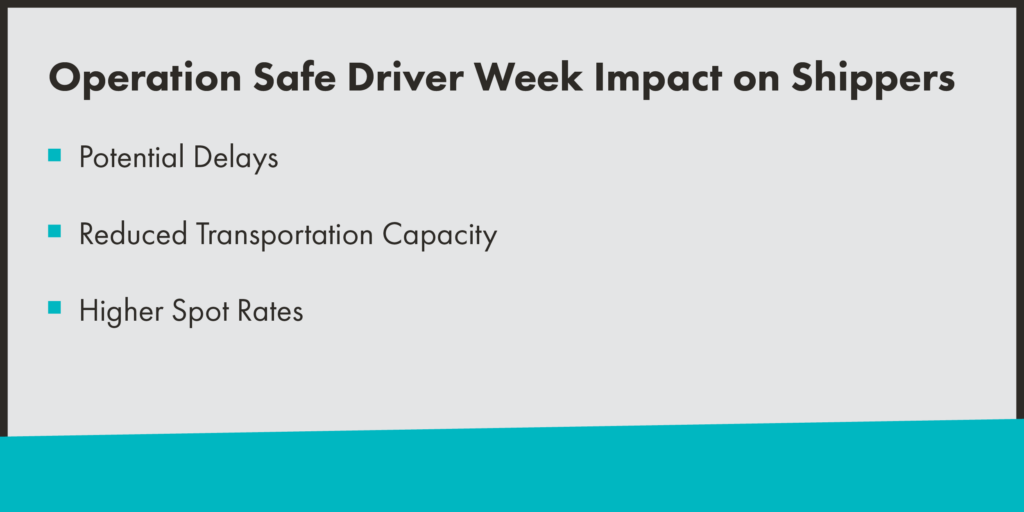
While the initiative focuses on driver safety, it can also influence transportation operations and supply chains. During the enforcement period, drivers may encounter:
- increased traffic stops
- longer roadside interactions
- delays caused by enforcement activity
- reduced driving productivity
- route disruptions in heavily monitored areas
As a result, some markets may experience temporary capacity constraints or minor fluctuations in spot rates. Shippers may also see an increase in shipment delays.
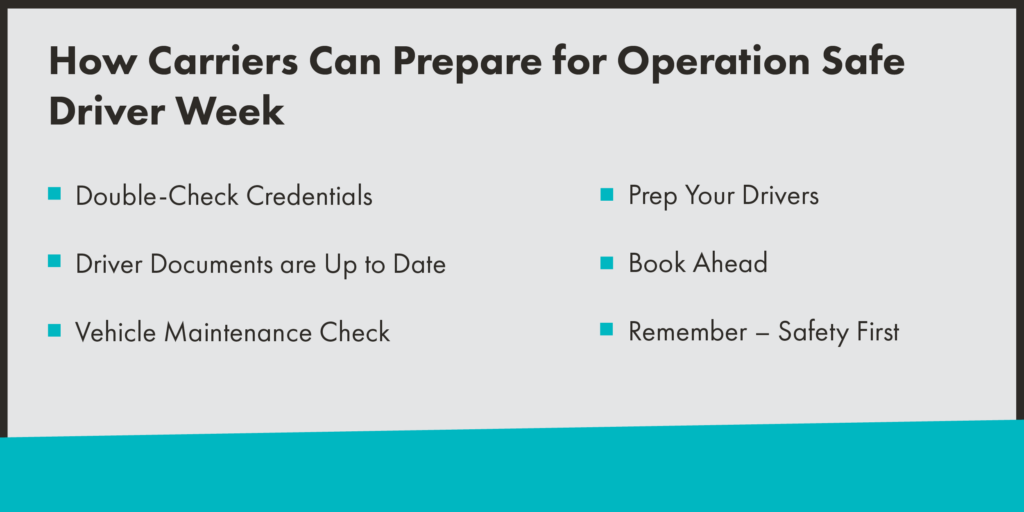
How Carriers Can Prepare for Operation Safe Driver Week
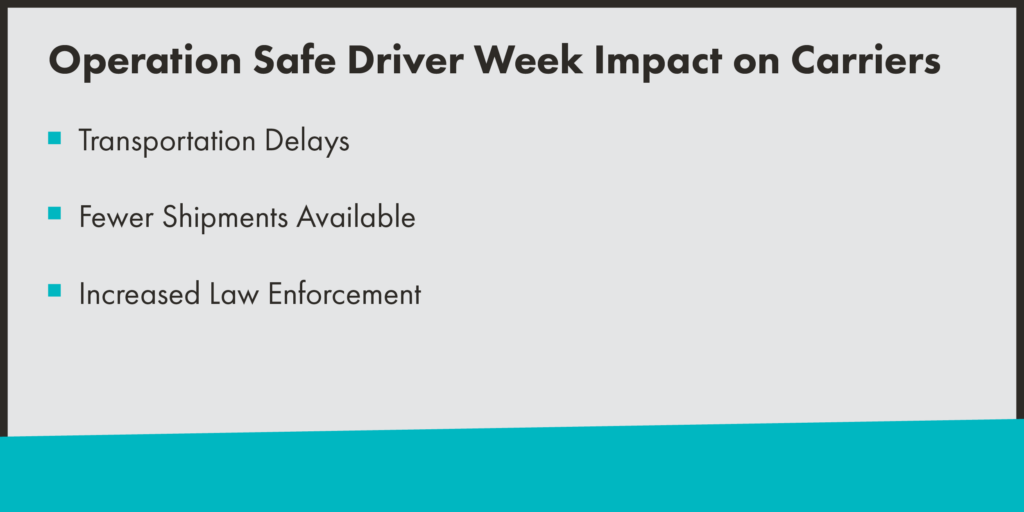
Carriers are similarly affected, and there is the potential for delays, less freight volume, scheduling challenges, and higher scrutiny from law enforcement.
Double-Check Credentials
Ensure all company credentials, like operating authority, hazmat endorsements, TWIC cards, and any other relevant permits, are current and accessible.
Driver Documents are Up to Date
Have drivers verify that all paperwork is up to date and accessible in case of inspection.
Vehicle Maintenance Check
Double-check that all vehicles have undergone any necessary preventive maintenance and are in top operating condition to avoid delays due to roadside repairs.
Prep Your Drivers
Make sure drivers are aware of this week and the potential for stops or delays. Train drivers on proper procedures for interacting with law enforcement. Make sure they know the channels to communicate any disruptions to their journey.
Book Ahead
Shippers may choose to reroute shipments, choose alternative modes, or plan around this week. Consider booking shipments well in advance for this week.
Remember – Safety First
The importance of this week is not disruptions but road safety. This is a great time to talk with drivers about safe driving behavior. You could also help educate the public on proper driving behavior when interacting with trucks. Remember, this week benefits everyone who shares the road.
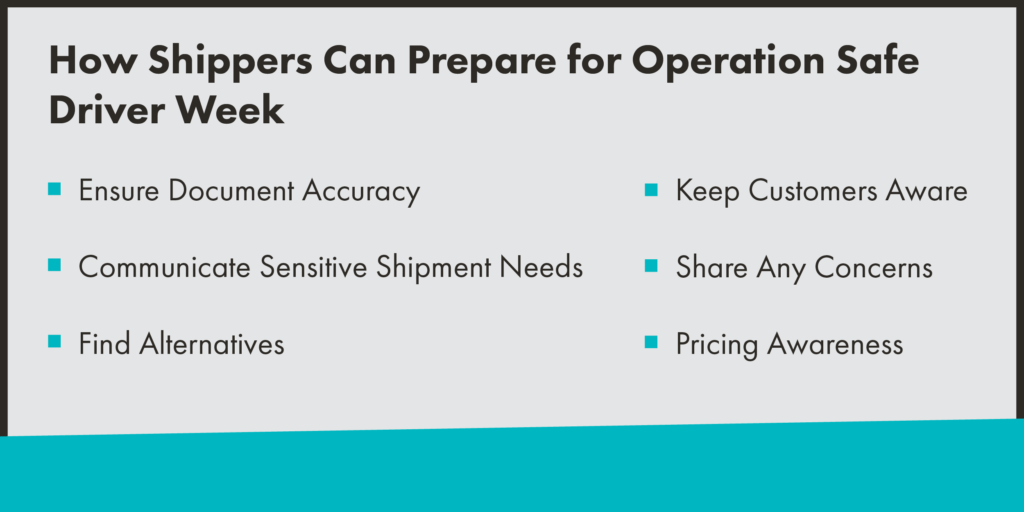
How Shippers Can Prepare for Operation Safe Driver Week
Shippers can also take proactive steps to reduce potential service disruptions.
Ensure Documentation Accuracy
Double-check all shipment documentation. Ensure it is accurate and complete to avoid delays during any unexpected inspections.
Communicate Sensitive Shipment Needs
If you have any special requirements or time sensitivities, communicate this well in advance. This helps your logistics provider plan effectively. Any last-minute communication risks delays.
Find Alternatives
Consider alternative transportation modes or routes if you expect any delays.
Keep Customers Aware
Be proactive and communicate potential delays during this week to your customers to manage expectations.
Share Any Concerns
Discuss any concerns you might have with your logistics provider. They can offer valuable insights and help develop strategies to reduce disruptions.
Pricing Awareness
Be aware of possible higher spot rates during Operation Safe Driver Week. When possible, plan shipments before or after this period to secure better pricing.
Why Roadway Safety Remains a Priority
CVSA continues to emphasize the importance of reducing dangerous driving behaviors because of their direct connection to roadway fatalities.
According to the CVSA, speeding contributes to nearly one-third of all traffic fatalities each year, making it one of the leading causes of preventable roadway deaths.
Operation Safe Driver Week is designed to improve awareness, encourage accountability, and ultimately create safer roadways for everyone.
Let’s Work Together to Keep Our Roads Safe
We believe road safety is paramount. While Operation Safe Driver Week might cause some temporary disruptions, it serves a vital purpose in promoting safe driving behaviors.
By staying informed and taking proactive steps, you can likely see minimal effects of Operation Safe Driver Week.
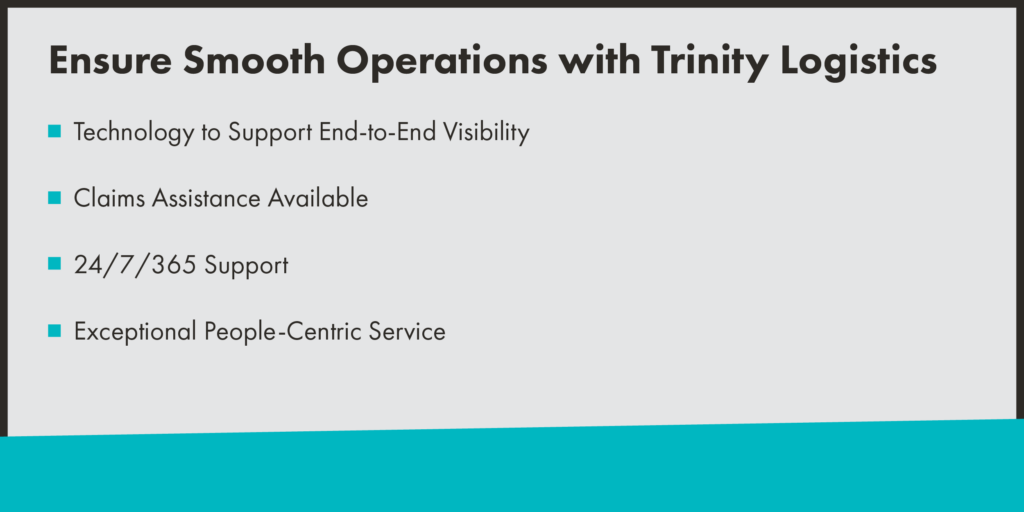
For additional opportunities to stay ahead of disruptions during Operation Safe Driver Week, consider partnering with Trinity Logistics. Our Team helps shippers navigate capacity challenges, market fluctuations, and transportation disruptions through customized freight solutions and proactive communication.
FAQs
Operation Safe Driver Week takes place July 12–18, 2026, across the United States, Canada, and Mexico.
This year’s focus is reckless, careless, and dangerous driving behaviors, including speeding, distracted driving, aggressive driving, and following too closely.
In some markets, increased enforcement activity can temporarily impact driver productivity, available capacity, and transit schedules.
Carriers should review driver documentation, conduct maintenance checks, reinforce safety expectations, and communicate enforcement expectations with drivers.
Shippers can prepare by communicating shipment priorities early, ensuring documentation accuracy, and planning for potential delays.