
07/13/2026 by Nicole Peterson
5 Construction Logistics Mistakes to Avoid
Construction logistics is often invisible in projects, that is, until something goes wrong.
Picture this: You’re ready for installation day. The crew is waiting on site. The equipment is ready. The schedule is all set.
Then you get the call: your crane shipment isn’t arriving on time.
What should have been a productive day on the project site quickly turns into a scramble to adjust schedules, coordinate crews, and explain delays. One missed delivery is all it takes to throw an entire construction project off track.
That’s why the most successful construction projects are backed by a solid logistics plan that keeps every delivery, deadline, and crew moving in sync.
Why Construction Logistics Matters More Than Ever
Today’s projects are bigger, busier, and more complex. Whether it’s a data center or a commercial build, construction teams have less room for delays than ever before. Tighter timelines, limited jobsite space, and rising material costs only add to the challenge.
The reality is, delays are incredibly common. In fact…
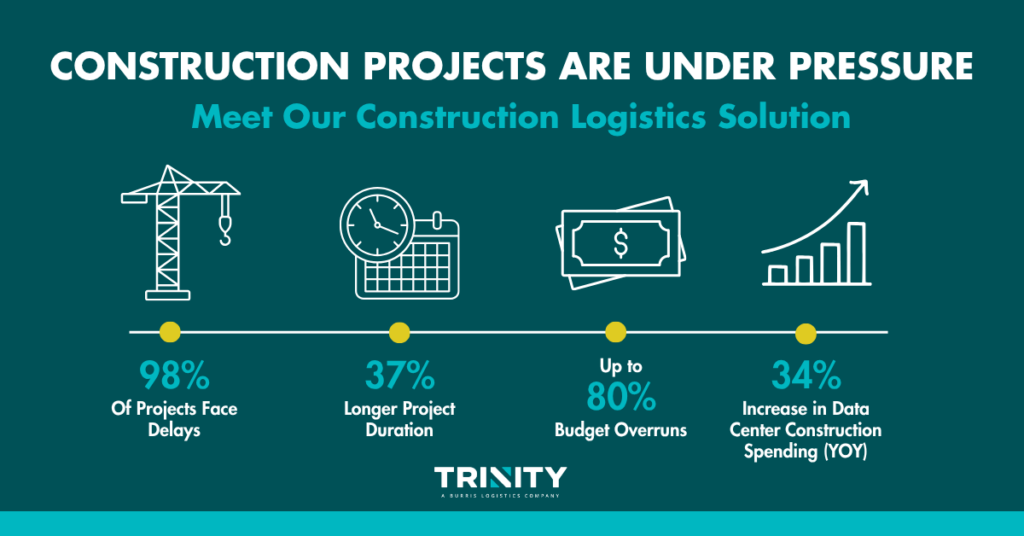
- 98% of North American construction projects face delays, and many run 20% behind schedule.
- Project durations are also extending 37% longer than planned, and budget overruns can reach as high as 80%.
And as most construction teams know, delays rarely travel alone. One late delivery can push back subcontractors, extend equipment rentals, delay inspections, create crane scheduling conflicts, and create a ripple effect that impacts the entire project.
At the same time, demand keeps growing. Construction spending on data centers alone jumped 34% year over year, creating more competition for materials, labor, and capacity. Add in tariffs, regulations, and supply chain disruptions, and there’s even less room for error than ever before.
At Trinity Logistics, we’ve seen firsthand that projects staying on schedule usually have one thing in common: logistics planning as a critical part of project management. Getting the right materials to the right place at the right time requires proactive planning, clear communication, and reliable transportation partners that can adapt when conditions change.
5 Common Construction Logistics Mistakes
Construction project delays usually don’t come from one major issue. They’re often caused by several smaller problems piling up. Some of the most common causes are:
Late or Misaligned Material Deliveries
Nearly 40% of construction projects face delays because of supply chain disruptions. If materials don’t show up on time or arrive out of sequence, crews and schedules are forced to wait.
Lack of Coordination Between Jobsite and Transportation Teams
Miscommunication and last-minute changes can quickly throw a project off track. Trucks may arrive before staging areas are ready, materials may be unloaded in the wrong location, or deliveries may conflict with other critical jobsite activities, like crane scheduling.
Limited Shipment Visibility
If no one knows a shipment is delayed until the last minute, crews continue preparing for work that can’t happen. Real-time visibility gives project teams time to adjust labor schedules, communicate changes, and minimize disruption.
Poor Planning Around Site Access, Staging, and Scheduling
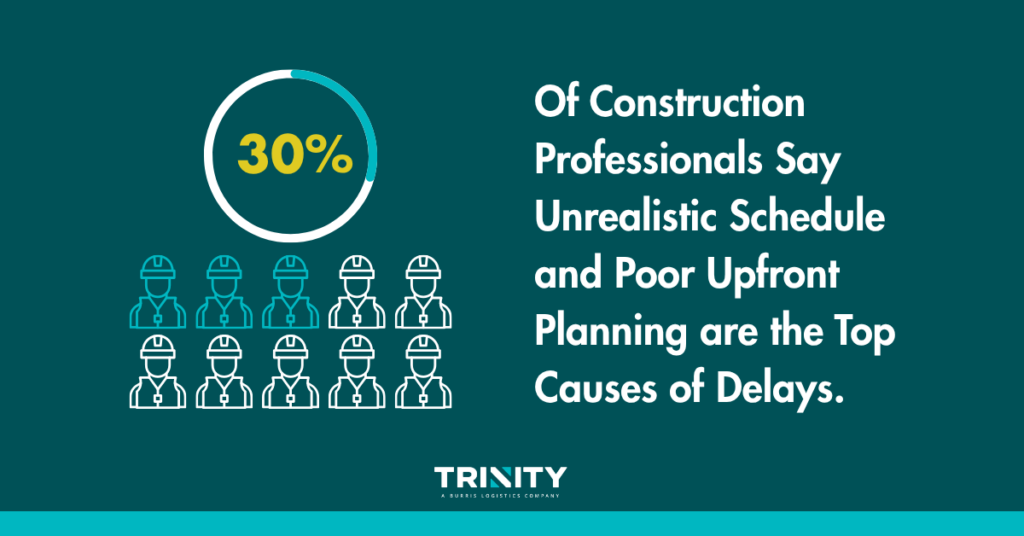
30% of construction professionals say unrealistic schedules and poor upfront planning are top causes of delays. Deliveries should support the workflow, not interrupt it.
Reactive Decision-Making Instead of Proactive Planning
Waiting until there’s a problem usually makes the problem bigger… and more expensive.
And as anyone in construction knows, once one thing falls behind, everything else seems to follow right along with it.
The good news? Most delays can be planned for before they impact the project.
Construction Logistics Challenges to Plan For
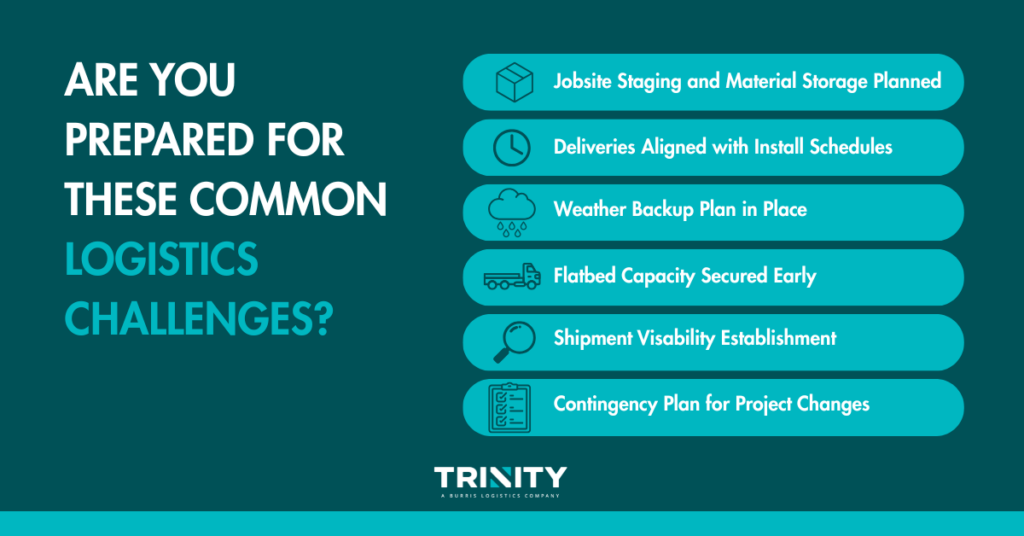
Construction projects move fast, which means logistics challenges can show up just as quickly. A few of the biggest things teams need to plan for include:
Jobsite Workflows and Material staging
Deliveries need to line up with install schedules, especially when jobsites have limited space. Too much material onsite can create congestion, while missing materials can bring work to a halt.
Construction Material Delivery Timing
In construction, timing matters just as much as speed. Early deliveries can clutter the site, and late deliveries can stall crews and delay progress.
Weather and Site Disruptions
Weather impacts both transportation and onsite work, making it a major factor in project delays, especially for urban and large data center builds. Weather-related delays alone have been shown to increase project durations by more than 25% and costs by nearly 24%
Seasonal Demand & Flatbed Capacity
As more construction projects break ground, finding the right equipment at the right time becomes more challenging. Costs can rise, capacity can tighten, and lead times can stretch.
A little planning upfront can save a whole lot of scrambling later.
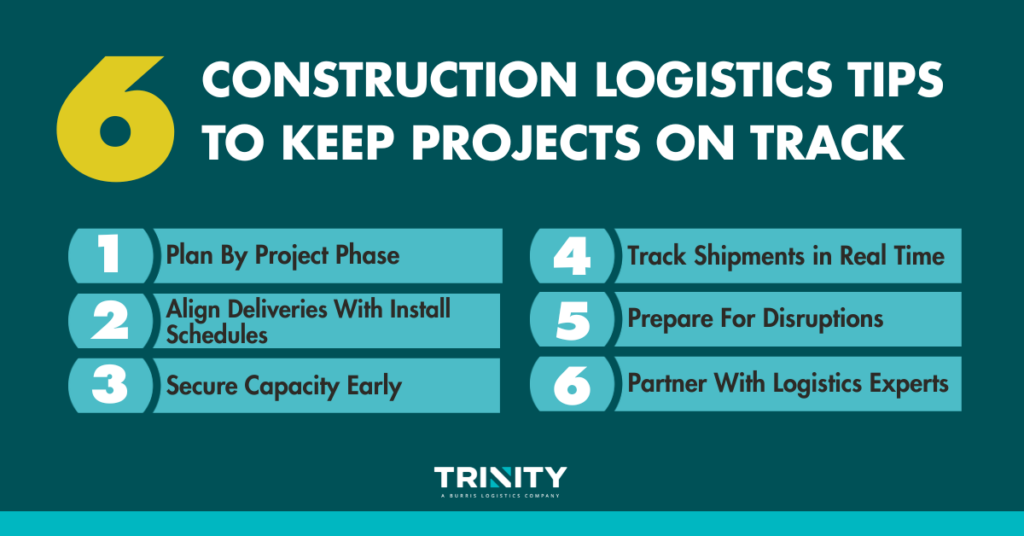
6 Construction Logistics Tips to Keep Projects on Track
- Build a Proactive Construction Logistics Plan
The best construction logistics plans start long before the first shipment hits the road. Waiting until materials are ready to move usually means you’re already playing catch up.
By planning project phases, teams can better coordinate deliveries, labor, and equipment needs, and installation schedules. It’s much easier to adjust a plan before work begins than to untangle schedule conflicts and resource gaps once work is already underway.
- Align Construction Materials Delivery with Jobsite Workflows
In construction, timing matters just as much as speed. Deliveries that arrive too early can create storage headaches, block access points, or crowd limited laydown space. Late deliveries can leave crews standing by with nothing to install.
The goal isn’t just getting materials to the job site. It’s getting them delivered for exactly when the job site is ready for them.
- Secure Flatbed and Project Cargo Logistics Capacity Early
Construction season has a way of making everyone need the same equipment at the same time.
Waiting until the last minute to secure flatbed, step deck, RGN, or heavy haul capacity can lead to higher costs, longer lead times, and fewer qualified carrier options. Booking early helps avoid those last-minute scrambles and pricing spikes. It keeps transportation from being the weak link in your project schedule.
- Improve Visibility Across All Shipments & Supply Chains
Nobody likes surprises when they’re waiting on a critical shipment.
Knowing where materials are, and when they arrive gives project teams time to coordinate labor, adjust crane schedules, update site plans, and communicate the changes before a delay becomes a full jobsite disruption.
- Plan for Disruptions Before They Happen
Weather happens. Permits get delayed. Site conditions change.
The projects that stay on track aren’t lucky ones. They’re the ones with backup plans already in place. Building contingency plans for alternate routes, delivery windows, staging options, and schedule changes helps teams respond quickly instead of scrambling once the problem is on site.
- Work with Experienced Construction Logistics Partners
Large projects come with a lot of moving pieces, and sometimes it feels like they’re all moving in different directions.
An experienced construction logistics partner helps manage timing, communication, specialized equipment, permitting needs, and the countless moving pieces that come with high-value or high-volume freight.
The Right Logistics Partner Keeps Projects Moving
Construction logistics involves a lot more than simply finding a truck.
Every flatbed, heavy haul, or over-dimensional shipment requires careful coordination between suppliers, carriers, project managers, and jobsite teams. Timing, permitting, securement, route planning, and specialized equipment all have to come together without slowing the project down.
That’s where experience matters.
At Trinity Logistics, we help construction teams coordinate complex deliveries with proactive communication, real-time shipment visibility, specialized equipment access, and a trusted carrier network across North America. Whether you’re managing multiple shipments of phased material deliveries, oversized equipment transport, or high-value heavy haul freight, our Team works behind the scenes to completely manage your project logistics.
Keep Your Construction Projects Moving Forward with a Smart Logistics Plan
The right logistics plan helps keep timelines intact and budgets on track. It reduces risk, improves efficiency, and gives teams a better chance of staying ahead of delays.
From building materials and structural steel to oversized equipment and project cargo, Trinity supports construction shippers with:
- Real-time shipment visibility and 24/7 access through our Customer Portal
- A reliable network of qualified carriers across North America
- Quick access to specialized equipment like RGNs or multi-axle trailers
- Additional insurance options for high-value freight
- Upfront pricing, including escorts, permits, etc.
- Support for high-volume construction project logistics
- After-hours and weekend support when plans change outside the typical 9-5
Construction schedules don’t exactly stop for weekends, weather, or unexpected changes – and neither do we.
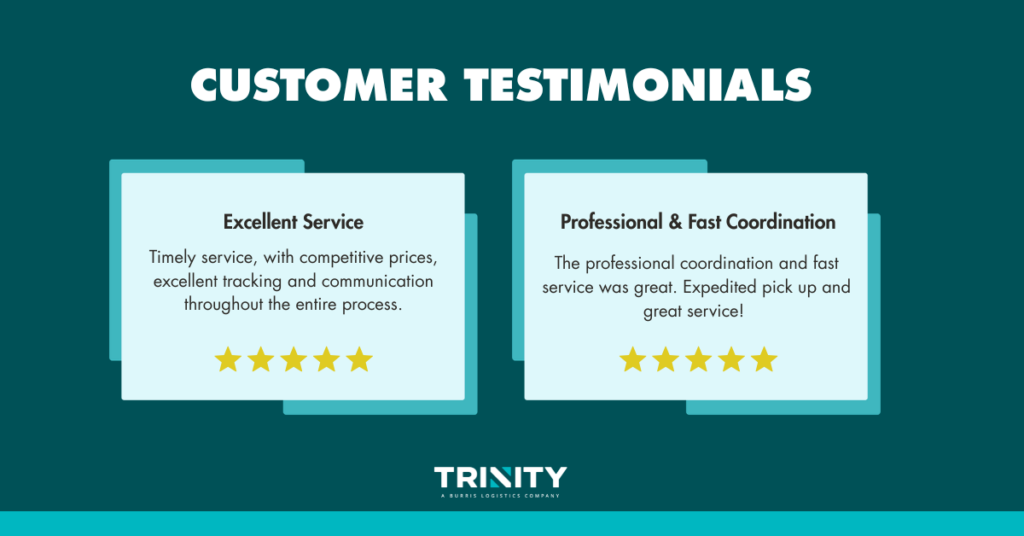
Curious about what it’s like working with Trinity? Here’s what customers have shared:
Construction projects have enough variables you can’t control. Your logistics partner shouldn’t be one of them.