

06/15/2026 by Greg Massey
June 2026 Freight Market Update
Get the latest insights shaping the logistics industry with Trinity’s June 2026 Freight Market Update, powered by our Freightwaves Sonar subscription.
Rail’s Slow, Steady Ascent
The conversation for the last 6 months has been predominantly around the happenings in the truckload market.
Rightfully so, it accounts for 70% of the volume moved in this country. But we don’t want to sleep on the happenings with the intermodal market. Like truckload rates, intermodal rates have been climbing particularly for spot freight.
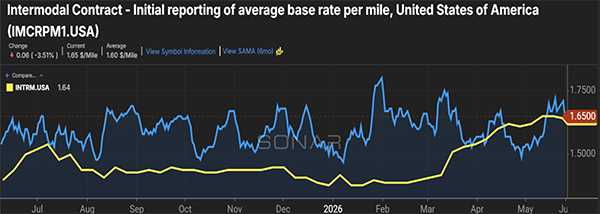
Figure 1.1 shows the rate creep via the yellow line for spot shipments, versus the blue line which highlights contract rates for container moves. While it’s not the 200% increase we have seen on the truckload side, intermodal spot rates have risen 15% year-over-year.
Increasing volumes, as shippers look to stay ahead of inventory churn and transit times are not as important, have allowed rail carriers to be selective in their accepted freight, almost discouraging the random, spot shipment volumes.
Shippers should anticipate spot rates to continue their slow climb, soon to be followed by increases in contract volume.
Rejection Isn’t Resting
Rejection rates for truckload freight continue to remain elevated.
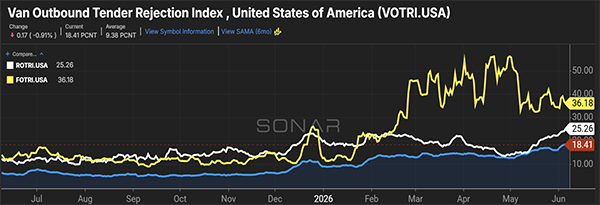
Flatbed rejections have cooled a bit but still holding at one of every three tenders being rejected by carriers.
With produce season upon us, reefers get the spotlight for the bulk of those freight moves, and rejection rates are reflecting that. 25% of the time carriers are saying no to those moves which require temperature regulated transit.
And while not to the level of the other major equipment types, van rejections are hovering in the 18% range. The days of single digit rejection rates are well behind us and look for this trend to continue for the foreseeable future.
Flat-Out Busy
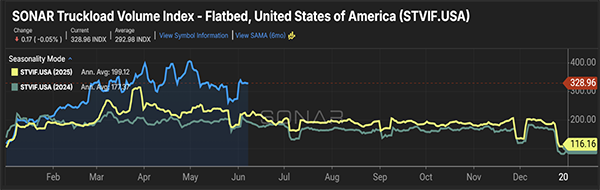
Speaking of flatbeds, freight volumes for this move type continue to perform above the past several years (Figure 3.1).
There is always the surge that happens in early spring, but adding to that this year has been the need for materials in the construction of numerous data centers across the country. We are just getting started with spending allocated for data center construction, a trend that will continue for the next 5 years, if not longer.
Don’t Let Market Shifts catch you off guard
Freight conditions can shift quickly and have a major impact on your transportation strategy. Subscribe to receive our monthly Freight Market Update in your inbox and also have the option to receive our Weekly News update for a quick Friday morning snapshot of what’s shaping the market.
Don't Miss the Next One – Sign UpLooking for a more reliable transportation strategy? Request a free quote for your next shipment and see how Trinity helps shippers stay flexible in changing market conditions.
Quote Your Next Shipment With Trinity