07/07/2026 by Nicole Peterson
6 Freight Planning Tips for Peak Retail & Holiday Season
Freight planning should begin long before peak season shipping chaos arrives.
By late May, back-to-school demand, holiday prep, and seasonal food shipping all start competing for space.
That usually means tighter capacity, shifting demand, and more pressure on delivery schedules. A challenge for shippers is that often by the time their transportation teams feel the pressure, some of the best carrier capacity has already been committed.
Just one missed delivery can lead to empty shelves, chargebacks, unhappy customers, and higher freight costs.
If rates are climbing and appointment windows are shrinking, peak season has probably already clocked in.
The good news? A solid freight planning and logistics strategy can help keep your supply chain moving smoothly before the real holiday rush hits.
Why Peak Freight Planning Matters More Than Ever
Retail and food supply chains are dealing with more pressure from every direction during this time. Costs continue rising, and truckload and refrigerated space becomes harder to secure. Retailers are also enforcing stricter OTIF requirements, appointment windows, and chargeback policies.
Customer expectations are also higher. Shelves need to stay stocked, and deliveries need to arrive faster than ever.
When freight is late, the impact can show up across inventory, sales, labor planning, and customer satisfaction.
For transportation teams already working with tighter timelines and limited visibility, reactive planning leaves very little room for error.
The longer teams wait to plan, the fewer options they have when capacity tightens or disruptions happen.
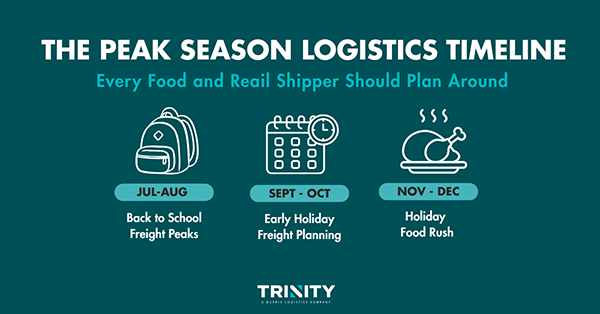
The Peak Season Timeline Every Food and Retail Shipper Should Plan Around
May – July: Produce & Back-to-School Freight Peaks
Produce season and back-to-school kicks off the start of peak season shipping pressure. Retail inventory ramps up for school supplies, apparel, electronics, grocery products, and snacks as families shift into “everything all at once” mode.
During these few months, dry van and refrigerated freight both get harder to secure as carriers prepare for heavier fall demand. Freight starts getting competitive long before most people are thinking about the holidays.
September – October: Early Holiday Freight Planning
Holiday shipping starts earlier every year, with some inventory moving as early as August. Food and beverage shippers also begin preparing for increased seasonal demand heading in Q4.
Retailers also tighten appointment schedules and inventory deadlines during this period.
For many transportation teams, this is the point where flexibility really starts disappearing. Carrier availability becomes more competitive, appointment schedules tighten, and recovering from delays gets more expensive.
Even small delays can snowball into bigger disruptions later in the season.
November – December: Holiday Food Rush
By November, holiday food shipping hits full speed.
Demand rises for candy, frozen food, beverages, baking products, and other seasonal inventory.
At the same time, refrigerated freight capacity becomes even tighter as retail shipping volumes peak.
Teams that wait too long to secure backup capacity may end up paying more to move freight.
Missed delivery windows become more expensive, and last-minute freight solutions become harder to secure.
What Can Go Wrong During Peak Shipping Season
Peak season problems tend to pile up fast. One delayed shipment can quickly lead to:
- Missed retailer delivery windows
- Empty shelves and stockouts
- Unfilled customer orders
- Expensive expedited freight costs cutting into margins
- Reduced shipment visibility and delayed communication
- Carrier capacity shortages
- Chargebacks, penalty fees, and OTIF failures
- Strained retailer and supplier relationships
- Increased pressure on internal transportation teams
During peak season, even small upsets can lead to bigger problems across inventory, store performance, and customer satisfaction.
The most expensive peak season problems often aren’t caused by a single disruption. They’re caused by not having a plan in place before the disruption happens.
If your team spent last peak season reacting instead of planning ahead, now’s the time to rethink the strategy before the next freight rush hits.
Get Ahead of the Peak Season Curve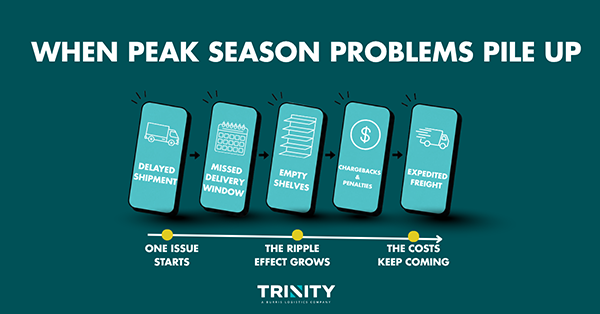
Checklist: Are You Already Behind on Peak Season Freight Planning?
If any of the following sound familiar, now may be the time to revisit your transportation strategy:
- Carrier commitments haven’t been finalized
- Backup routing options haven’t been identified
- Retail compliance requirements haven’t been reviewed recently
- Shipment visibility gaps still exist
- Forecasts haven’t been updated to reflect changing demand
- Contingency plans haven’t been documents
The earlier these gaps are addressed, the more flexibility your team typically has when demand starts climbing.
6 Freight Planning Tips for Peak Season Logistics
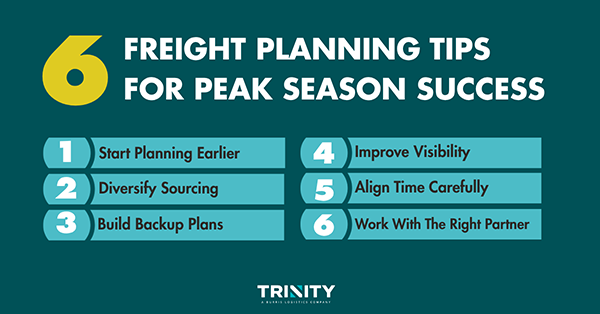
1. Start season planning earlier
Peak season planning should start months before holiday demand hits full speed.
Waiting until capacity becomes a problem will mean fewer carrier options at a much higher rate.
Early forecasting is becoming increasingly important as consumer spending patterns continue shifting. Static forecasting alone is no longer enough during peak retail and food shipping seasons.
More teams are using real-time data and AI tools to track changes in demand. Better forecasting can help secure capacity, control costs, and reduce disruptions.
But forecasting is only part of the equation. Cross-functional planning is just as important. When procurement, inventory, sales, production, and transportation teams are aligned, its easier to spot potential bottlenecks before peak season demand arrives. Better communication early on can prevent surprises later.
2. Reduce risk with diversified sourcing
Relying too heavily on a single supplier, sourcing region, or transportation route can quickly create challenges, especially as tariff policies, geopolitical events, and supply chain disruptions continue to evolve.
Diversifying suppliers, manufacturing locations, ports of entry, and transportation routes can create greater flexibility and resilience, helping businesses adapt more quickly when conditions change and keeping freight moving during peak season.
3. Build backup plans before you need them
Peak season rarely goes exactly according to plan.
Weather delays, capacity crunches, and routing disruptions are just a few challenges that are bound to happen when shipping volumes spike.
That’s why it helps to diversify carriers, transportation modes, and routing options before problems happen.
It is also important to have communication plans in place. When suppliers, carriers, customers, and internal teams know how disruptions will be handled, it’s easier to respond quickly and keep freight moving.
Waiting until freight is already delayed leaves very few good options.
A little flexibility now can save a lot of stress later.
4. Improve visibility across your supply chain
Real-time shipment visibility helps reduce surprises during peak season. Faster updates and better communication allow teams to respond to delays before they turn into bigger problems.
Today, visibility is more than just tracking freight. Real-time updates help transportation teams spot potential issues sooner, make better decisions, and adjust plans before delays impact customers. Predictive tools can also help identify problems early, giving teams more time to respond and keep freight moving.
As retailer appointment windows and OTIF requirements get tighter, visibility becomes even more important for keeping freight moving smoothly.
Need More Visibility and Control During Peak Season?
As freight volumes grow and retailer requirements get stricter, transportation teams have more to manage each day.
Trinity’s Managed Transportation solutions help shippers improve visibility, streamline coordination, and stay ahead of disruptions before they impact service.
Learn About Trinity's Managed Transportation ->5. Align inventory and delivery timing carefully
During peak season, timing is CRUCIAL.
Early deliveries can create storage and congestion issues, while late deliveries can lead to stockouts, missed sales, and unhappy retailers. Finding the right balance helps keep inventory flowing without unnecessary headaches.
Delivering at the right place matters just as much as delivering on time. Coordinating deliveries around retailer schedules and warehouse capacity can help prevent delays and costly compliance penalties.
6. Work with a logistics partner that can scale with demand
Peak season moves fast, and flexibility matters. Working with a logistics partner that offers access to larger carrier networks, multiple transportation modes, and backup support can help your team adapt when demand suddenly spikes.
Beyond capacity, experienced logistics providers can offer valuable market insights, transportation expertise, and contingency planning support. Those insights can help businesses make faster decisions and stay ahead of the ever-changing conditions of peak season.
Why Food and Retail Shippers Turn to 3PLs During Peak Season
Peak season logistics strategy takes more than just finding trucks. As demand rises and capacity tightens, many food and retail shippers turn to 3PLs for added flexibility, visibility, and operational support.
In fact, 87% of shippers say they increase their use of outsources logistics services during challenging market conditions. A strong 3PL relationship can help transportation teams secure capacity faster, improve communication, and avoid costly last-minute decisions when peak season pressure builds.
At Trinity Logistics, we help shippers stay ahead of seasonal demand with scalable capacity, multimodal solutions, and a carrier network built to flex when things get busy.

Stay Ahead of Peak Freight Season
Peak season shipping will always bring pressure, but the right preparation can help keep your supply chain stable when demand starts climbing.
The transportation teams with the most options during peak season are usually the ones that start planning before capacity gets tight – not after.
At Trinity Logistics, we help food and retail shippers navigate seasonal volatility with reliable capacity, real-time visibility, flexible transportation options, and proactive support when it matters the most.
Whether you’re evaluation carrier coverage, preparing for retail compliance requirements, or simply looking to strengthen your transportation strategy before demand spikes, having the right partner in place can make a meaningful difference in your bottom line.
Prepare for Peak Season with Reliable Truckload Capacity
Peak season success often comes down to having the right transportation network in place before demand surges.
Learn how Trinity’s truckload solutions help food and retail shippers secure capacity, improve visibility, and stay ahead of seasonal disruptions.
Explore Trinity's Truckload Services