

08/12/2026 by Christine Morris
CVSA Brake Safety Week 2026: What You Need to Know
CVSA Brake Safety Week returns August 23–29, 2026.
While this annual initiative is designed to improve commercial vehicle safety, it can also create temporary ripple effects throughout the transportation industry.
For shippers, that may mean tighter capacity, longer transit times, and slight fluctuations in freight rates. For carriers, it means increased roadside inspections and greater attention to vehicle maintenance.
The good news is that a little preparation goes a long way for Brake Safety Week.
Whether you’re shipping freight or managing a fleet of trucks, understanding what to expect this week can help minimize disruptions while supporting the larger goal of keeping everyone on the road safer.
Key Takeaways
- CVSA Brake Safety Week runs August 23–29, 2026.
- Commercial vehicle inspectors across the U.S., Canada, and Mexico will conduct increased brake system inspections.
- This year’s inspection emphasis is brake drums and rotors.
- Temporary transportation delays and localized capacity shifts are possible during the inspection period.
- Planning shipments early and communicating with your logistics provider can help reduce disruptions.
Table of Contents
What is CVSA Brake Safety Week?
The Commercial Vehicle Safety Alliance (CVSA) is a non-profit organization dedicated to improving commercial motor vehicle safety across North America through collaboration between law enforcement agencies, government organizations, and the transportation industry.
One of CVSA’s longest-running initiatives is Operation Airbrake, a brake safety program launched in partnership with the Federal Motor Carrier Safety Administration (FMCSA) in 1998. Its mission is simple: reduce crashes caused by brake-related defects through education, inspections, and enforcement.
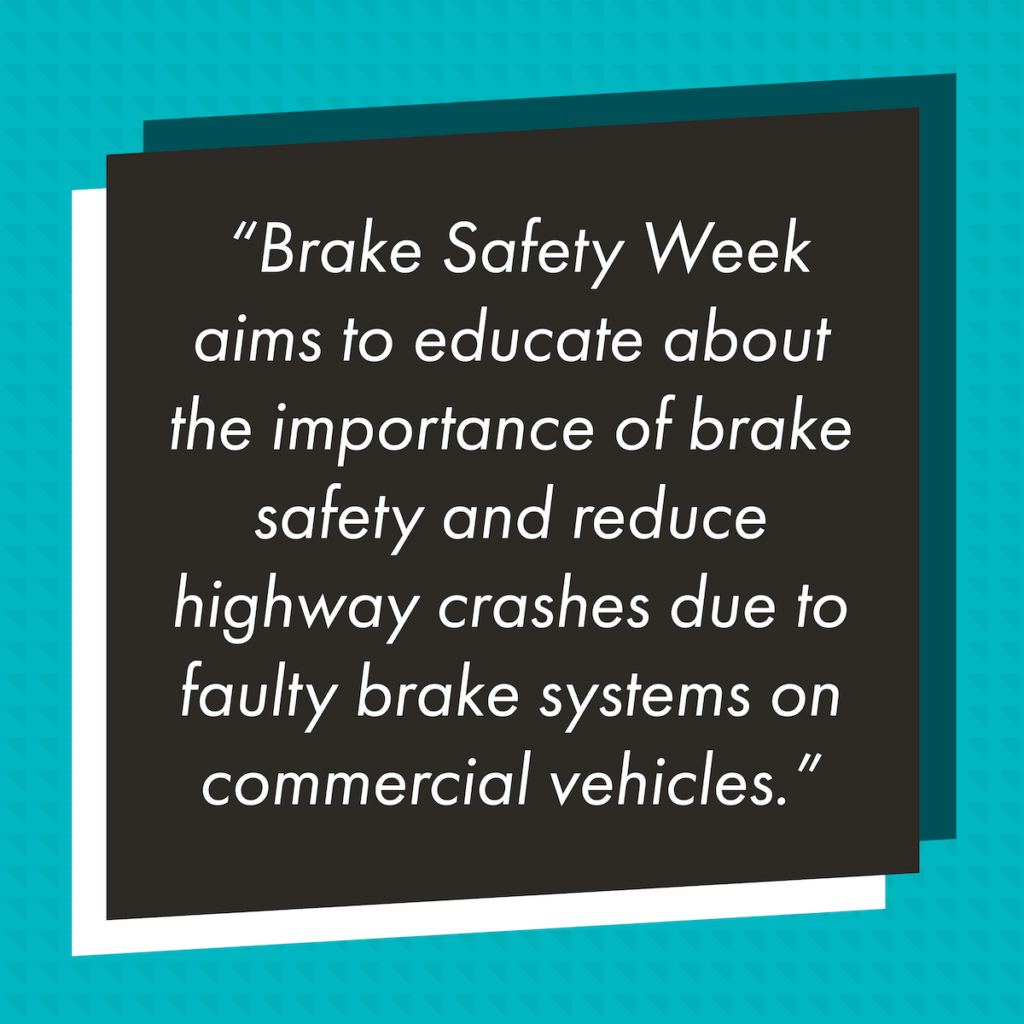
Each year, Operation Airbrake includes CVSA Brake Safety Week, a weeklong inspection event during which certified inspectors perform brake safety inspections on commercial motor vehicles throughout the United States, Canada, and Mexico.
Unlike CVSA’s International Roadcheck, which examines multiple aspects of a commercial vehicle and driver, Brake Safety Week places special emphasis on one of the most critical vehicle safety systems – the brakes.
Why Brake Safety Matters
Brake-related violations remain one of the most common reasons commercial vehicles are placed out of service during roadside inspections.
According to CVSA, brake system violations consistently rank among the leading vehicle out-of-service violations across North America. Properly functioning brakes help drivers stop safely, maintain vehicle control, and reduce the risk of serious crashes.
This year’s inspection emphasis is brake drums and rotors.
Inspectors will be paying close attention to signs of damage, including:
- Cracked brake drums
- Missing or broken pieces
- Heat damage
- Excessive wear
- Rotor defects that could reduce braking performance
These components play a critical role in stopping a commercial vehicle safely. If a drum or rotor is damaged beyond acceptable limits, the vehicle may be placed out of service until repairs are completed.
While Brake Safety Week is primarily about improving roadway safety, removing unsafe equipment from the road can also create temporary operational impacts throughout the freight market.
What Happens During a Brake Safety Week Inspection?
During Brake Safety Week, certified inspectors perform thorough brake system inspections designed to identify defects that could affect the safe operation of a commercial vehicle.
A typical inspection may include reviewing:
- Driver’s license
- Vehicle registration
- Low air warning device
- Pushrod travel
- Brake linings
- Brake drums and rotors
- Air loss rate
- Tractor protection system
- Air brake ABS system
Inspectors also evaluate the overall condition and adjustment of brake components to ensure they meet federal safety standards.
Vehicles found with brake-related out-of-service violations cannot continue operating until the necessary repairs have been completed.
For carriers, this reinforces the importance of preventive maintenance and regular inspections throughout the year, not just before Brake Safety Week begins.
Why Brake Safety Week Matters to Shippers
Although Brake Safety Week focuses on commercial vehicle safety, its effects can extend beyond roadside inspections.
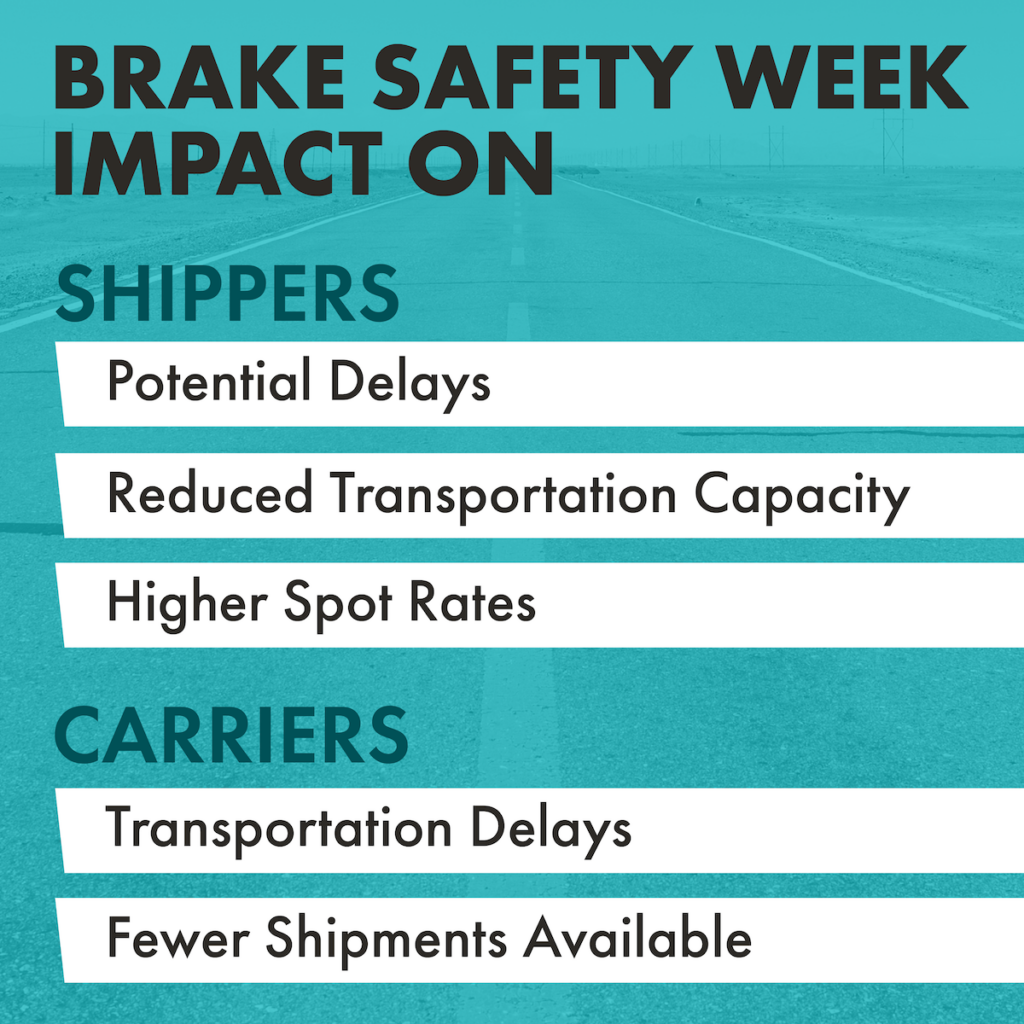
When trucks spend additional time undergoing inspections or are temporarily removed from service for repairs, it can reduce available capacity in certain markets. While these impacts are usually short-lived, they may affect time-sensitive shipments or freight moving through heavily traveled corridors.
Shippers may experience:
- Temporary transportation delays
- Slight reductions in available capacity
- Longer lead times for last-minute shipments
- Short-term spot market fluctuations in some regions
For most businesses, these disruptions are manageable with proactive planning.
The companies that navigate Brake Safety Week most successfully aren’t necessarily changing their entire transportation strategy. They’re communicating earlier, planning ahead, and working closely with trusted logistics partners.
How Brake Safety Week Affects Carriers
Carriers can also feel the effects of Brake Safety Week, particularly if they aren’t prepared for the increased inspection activity.
In addition to the possibility of roadside delays, carriers may experience scheduling challenges, temporary reductions in available freight, and increased scrutiny from inspectors. Staying ahead of routine maintenance and ensuring drivers have the proper documentation can help minimize disruptions.
Common impacts include:
Transportation Delays
Increased inspections can lead to longer wait times at weigh stations and inspection sites. While many inspections are completed efficiently, additional stops may affect delivery schedules and available driving hours.
Temporary Freight Shifts
Some shippers choose to move freight before or after Brake Safety Week to avoid potential delays. This can create short-term fluctuations in freight availability and shipping demand.
Increased Inspection Activity
Drivers should expect a greater likelihood of being selected for inspections throughout the week. Vehicles that are well maintained and inspection-ready are less likely to experience significant delays.
How Shippers Can Prepare for Brake Safety Week
Most shippers won’t need to make major changes during Brake Safety Week. However, a few proactive steps can help reduce the likelihood of service disruptions.
Plan Shipments Early
If you have freight with strict delivery windows, consider booking shipments earlier than usual. Giving your logistics provider additional lead time creates more flexibility if capacity tightens or inspections cause delays.
Verify Shipment Documentation
Incomplete or inaccurate paperwork can create unnecessary delays at any time of year. Before your shipment moves, confirm that bills of lading, addresses, commodity descriptions, and special instructions are complete and accurate.
Communicate Time-Sensitive Freight
If a shipment has appointment times, production deadlines, or customer commitments tied to delivery, communicate those requirements as early as possible.
The more visibility your logistics provider has, the more effectively they can plan routing and carrier selection.
Build Flexibility Into Your Transportation Plan
While most freight continues moving without issue during Brake Safety Week, flexibility is valuable if conditions change.
Depending on your shipment, that could include:
- Adjusting pickup dates
- Considering alternate routes
- Exploring different transportation modes
- Building additional transit time into customer expectations
Stay Connected With Your Logistics Provider
Transportation conditions can change quickly during industry-wide inspection events.
Working with a logistics provider that proactively monitors shipments and communicates updates helps reduce surprises and keeps everyone aligned if adjustments become necessary.
How Carriers Can Prepare for Brake Safety Week
Brake Safety Week shouldn’t require a last-minute scramble. Fleets that prioritize preventive maintenance throughout the year are generally well positioned for inspection week.
Still, taking a few extra steps before August 23 can help drivers avoid unnecessary delays.
Review Vehicle Maintenance Records
Confirm that tractors and trailers have completed scheduled preventive maintenance and that any outstanding brake-related repairs have been addressed.
Pay particular attention to brake drums, rotors, linings, and adjustment.
Verify Driver Documentation
Drivers should have all required documents readily available, including:
- Commercial driver’s license (CDL)
- Vehicle registration
- Insurance information
- Operating authority, when applicable
- Required permits and endorsements
Having documentation organized can help inspections move more efficiently.
Prepare Drivers for Inspections
Drivers should know what to expect during roadside inspections and understand proper procedures when interacting with inspectors.
Reviewing inspection expectations ahead of time can reduce stress and improve inspection efficiency.
Inspect Equipment Before Dispatch
Conduct thorough pre-trip inspections with additional attention given to brake components.
Identifying potential issues before a vehicle leaves the yard is far less disruptive than discovering them during a roadside inspection.
Communicate Early and Often
If delays occur, proactive communication makes a significant difference.
Drivers should know who to contact if inspections affect delivery schedules, while dispatchers should keep customers informed about any changes as quickly as possible.
Safety Benefits Everyone
It’s easy to focus on the operational impacts of Brake Safety Week, but the purpose of the initiative is much bigger than temporary transportation disruptions.
Properly functioning brakes help prevent crashes, protect drivers, and make the roads safer for everyone, including the families sharing the highway with commercial vehicles every day.
Brake Safety Week also serves as a valuable reminder that preventive maintenance isn’t just about compliance. It’s about protecting people, equipment, and the reliability that customers depend on.
Keep Freight Moving During CVSA Brake Safety Week 2026
CVSA Brake Safety Week is an important reminder that safe equipment and proactive planning go hand in hand.
While the increased inspection activity may create temporary transportation challenges, it’s ultimately designed to make North America’s highways safer for drivers, carriers, and everyone sharing the road.
For shippers, the best approach is simple: plan ahead, communicate early, and work with a logistics partner who can adapt when conditions change.
At Trinity Logistics, that’s what we do every day.
Whether it’s navigating seasonal capacity shifts, severe weather, inspection weeks, or unexpected disruptions, our Team helps businesses keep freight moving with proactive communication, flexible transportation solutions, and real people who are invested in your success.
Shipping During Brake Safety Week?

If you have freight moving during CVSA Brake Safety Week 2026, now is the time to start planning.
Our Team can help you:
- Secure reliable transportation capacity
- Plan around potential disruptions
- Build contingency plans for time-sensitive freight
- Stay informed with proactive shipment updates from pickup to delivery
Request a free freight quote today. We’ll keep your freight moving, no matter what week it is.
Shippers: Request a Free Quote Carriers: Find an Available Trinity Shipment Join Our Email List to Stay in the Know