
09/17/2026 by Christine Morris
How to Avoid Manufacturing Logistics Bottlenecks at Year-End
Year-end shipping puts manufacturing logistics under added pressure. Capacity can tighten, lead times can change, and a late inbound shipment or missed outbound pickup can quickly affect production schedules, customer commitments, and revenue goals.
That makes early transportation planning even more important. Manufacturers that wait until freight is ready may have fewer carrier options, less flexibility, and higher costs when plans change.
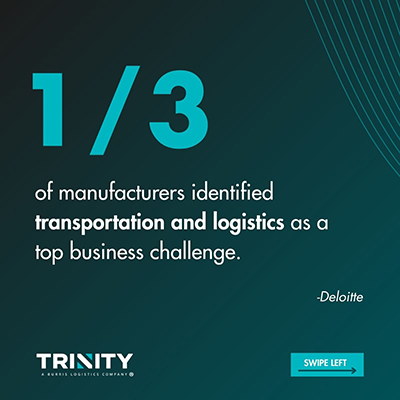
Transportation and logistics are already growing concerns for manufacturing companies. Deloitte’s 2025 Manufacturing Industry Outlook found that more than one-third of manufacturers identified transportation and logistics cost as a primary business challenge.
For transportation managers, a strong year-end manufacturing logistics strategy can help keep inbound materials, production schedules, outbound shipments, and customer commitments on track.
Key Takeaways
- Plan transportation alongside production. Forecast your inbound and outbound freight needs early. That gives your team more time to secure capacity and prepare backup options.
- Prioritize your most critical freight. Know which inbound shipments could disrupt production and which outbound loads could put customer commitments at risk.
- Pressure-test critical lanes. Know where carrier options are limited and have backup capacity or routing options ready before peak demand starts.
- Use visibility to drive action. Tracking is most useful when your team is able to learn about a delay early enough to adjust production, inventory, or delivery plans.
- Add logistics support before you need it. Extra carrier capacity and transportation options can help when your current resources are stretched.
Why is Manufacturing Logistics More Challenging at Year-End?
The final months of the year leave little room for error.
Manufacturers aren’t just trying to keep products moving. They’re also working toward business objectives that have been building all year, including:
- Meeting annual production goals
- Reaching revenue targets
- Fulfilling customer commitments
- Balancing inventory levels
- Completing budget and performance reviews
- Measuring KPIs and operational performance
- Preparing for next year’s production demand
At the same time, transportation teams are often navigating tighter capacity, increased seasonal demand, facility congestion, weather disruptions, and changing lead times.
This means successful manufacturing logistics requires close coordination between production, purchasing, inventory, and transportation.
Manufacturers that are better prepared for year-end don’t wait until production is complete to think about transportation. They plan transportation earlier to keep capacity, production, inventory, and customer needs aligned.
5 Questions to Ask Before Year-End Shipping Peaks
Before looking at the most common transportation bottlenecks, let’s take a closer look at where your own operation may be at risk for them.
Start by asking these 5 questions about your operations.
1. Which inbound shipments could disrupt production if they’re 24–48 hours late?
Not every shipment carries the same risk. Identify the raw materials and parts that are most important to production. These loads may need closer tracking, earlier capacity planning, and backup options.
2. Which outbound orders have firm year-end delivery requirements?
Identify customer-critical orders before capacity tightens. Knowing which shipments have less room for delay helps your team decide where to secure capacity first.
3. Which lanes have the fewest backup carrier options?
A lane that works well under normal conditions can become a problem when capacity tightens. Identify critical lanes that depend heavily on one carrier or have few backup options.
4. Where could facility schedules create risk?
Review holiday hours, appointment times, dock capacity, customer receiving schedules, and possible dwell time at key facilities.
Transportation capacity alone can’t prevent a delay if a facility isn’t ready to receive the shipment.
5. What’s the plan when a critical load is at risk?
Transportation, production, purchasing, sales, and customer service should know who needs to be notified and what backup options are available.
They should also know which shipments take priority when plans change.
If these questions uncover a gap, address it before peak demand starts. This way, your team will have more options than it would after a shipment is already at risk.
How Do Transportation Bottlenecks Affect Manufacturing Performance?
Transportation bottlenecks can affect manufacturing before and after production. Inbound delays can keep critical materials from reaching the production line. Outbound delays can put customer deliveries and revenue at risk.
Inbound Transportation Delays
Manufacturers depend on raw materials, components, and supplies arriving when they’re needed. When a critical shipment is late, the impact can extend beyond transportation.
Inbound transportation delays can lead to:
- Raw materials arriving behind schedule
- Production lines slowing or stopping
- Employees waiting on materials
- Manufacturing schedules shifting across multiple production lines
- Customer orders falling behind schedule
One delayed inbound shipment can create scheduling challenges that take days or even weeks to recover from.
Transportation managers should know which inbound shipments are most important to production and make those loads a priority.
Outbound Transportation Delays
Producing products on time is only one part of the equation. Finished goods still need to reach customers according to their delivery requirements.
When transportation isn’t available, finished goods may sit at the facility while customer delivery deadlines continue approaching.
Outbound transportation delays can result in:
- Shorter shelf life for time-sensitive products
- Finished goods taking up valuable warehouse or dock space
- Missed delivery windows
- Delayed revenue recognition
- Customer dissatisfaction
- Higher expedited freight costs to recover from delays
Strong manufacturing logistics connects production with transportation. This helps finished goods keep moving instead of creating another bottleneck.
What Are the Most Common Manufacturing Logistics Bottlenecks at Year-End?
Common year-end manufacturing logistics bottlenecks include tight capacity, rising freight costs, warehouse congestion, labor constraints, winter weather, and limited shipment visibility.
Recognizing these risks early gives transportation managers more time to respond before they disrupt production or customer deliveries.
Tight Transportation Capacity
Capacity can become harder to find during peak shipping periods. As demand rises, more shippers compete for trucks, equipment, and pickup times.
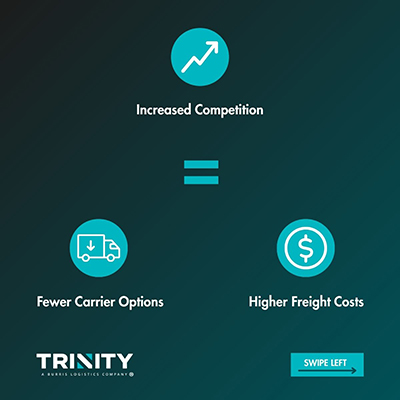
Securing capacity earlier, especially on high-volume, time-sensitive, or production-critical lanes, can give transportation teams more flexibility and fewer last-minute surprises.
Rising Freight Costs
Freight costs can become less predictable during peak shipping periods.
Common cost pressures include:
- Spot market rate volatility
- Fuel price fluctuations
- Limited equipment availability
- Seasonal or peak-related surcharges
For manufacturers with tight margins, unexpected freight costs can quickly affect the cost of an order.
Forecasting demand earlier gives transportation managers more time to compare options instead of making costly decisions under pressure.
Warehouse and Distribution Congestion
Higher year-end volume doesn’t only affect trucks. Warehouses, distribution centers, suppliers, and customer facilities can also become crowded.
That can lead to:
- Slower loading and unloading
- Appointment delays
- Longer dwell times
- Overflow inventory
- Finished goods remaining at the facility longer than planned
Pay attention to facility schedules and appointment needs, not just transit times. A truck arriving on time doesn’t help if the facility can’t receive it.
Labor Constraints
Transportation depends on people just as much as equipment.
Labor constraints among drivers, warehouse teams, loading crews, or distribution staff can lead to missed pickups, longer dwell times, and delayed deliveries.
Identify the suppliers, facilities, and customer shipments most at risk. Then prioritize freight where a delay could have the biggest effect.
Weather and Seasonal Disruptions
Winter weather can quickly disrupt transportation schedules, particularly when year-end deadlines leave little room for recovery.
Snow, ice, road closures, unsafe driving conditions, and other weather events can affect transit times and carrier schedules.
Rather than plan shipments around ideal transit conditions, transportation managers should identify weather-sensitive lanes and build additional lead time into critical shipments when possible.
Limited Transportation Visibility
Visibility matters most when a delay could affect production.
Without real-time visibility, manufacturers may not realize there’s a problem until materials are already late or a customer delivery is at risk.
Your team should be able to quickly answer:
- Where critical freight is
- Whether a shipment is running behind schedule
- Which delays could affect production
- Which customer commitments may be at risk
- Where inventory or scheduling flexibility may help absorb a delay
Visibility is most useful when it gives your team enough time to act.
Need More Transportation Options for Year-End?
Trinity Logistics can help you secure capacity, improve visibility, and build backup options around your most critical manufacturing freight.
Request a Quote7 Ways to Reduce Manufacturing Logistics Bottlenecks
Transportation managers can’t eliminate every disruption, but proactive logistics planning can create more options when conditions change.
1. Forecast Transportation Needs Earlier
Transportation planning should begin alongside production planning, not after the products are ready to ship.
Use production forecasts, historical shipping data, customer demand, and known year-end requirements to estimate inbound and outbound freight needs.
Forecasting earlier gives transportation partners more time to find capacity. It also helps your team spot gaps before they become urgent.
2. Secure Capacity Before Demand Peaks
Identify the shipments and lanes that cannot afford a delay.
This could include production-critical inbound materials, high-volume customer lanes, specialized equipment requirements, or orders tied to firm delivery deadlines.
Securing capacity earlier on priority freight can reduce your exposure to last-minute availability issues and give you more flexibility when conditions change.
3. Improve Transportation Visibility
Real-time shipment visibility can help your team act before a transportation delay becomes a production problem.
Look for transportation solutions that provide:
- Real-time shipment tracking
- Proactive shipment updates
- Early issue alerts
- Clear communication when exceptions occur
The sooner your team knows about a delay, the more time it has to adjust production, update customers, or find another transportation solution.
4. Diversify Transportation Options
Relying too much on a single carrier, route, or transportation mode can increase risk during busy shipping periods.
A broader carrier network and access to multiple transportation modes can give manufacturers more flexibility when primary options aren’t available.
This way you have reliable alternatives ready before you even need them.
5. Build Contingency Plans
Transportation disruptions happen, especially during busy shipping periods. Your response shouldn’t have to be invented in the moment.
Identify backup capacity, alternative routes, potential transportation plans, and escalation procedures before peak shipping pressure arrives.
For the most critical freight, transportation managers should know the answer to a simple question: “If plan A fails, what’s plan B?”
6. Strengthen Cross-Functional Planning
The strongest manufacturing logistics strategies aren’t owned solely by transportation.
Transportation managers should work with production, purchasing, inventory, customer service, and sales. Make sure everyone is using the same demand forecast and knows which shipments matter most.
For example, a one-day delay may be manageable when there is enough inventory on hand. Another inbound load could stop production if it’s only a few hours late.
Knowing the difference helps transportation teams focus resources where they matter most.
7. Partner with an Experienced 3PL
Year-end transportation management requires time, carrier relationships, visibility, and the ability to respond quickly when plans change.
An experienced third-party logistics provider (3PL) can expand your transportation options by providing access to carrier capacity, multiple transportation modes, shipment visibility, and logistics professionals who can help manage exceptions.
For manufacturers, the right 3PL should act as an extension of your transportation team. They should understand which shipments matter most, communicate clearly, and help find solutions when plans change.
When Should Manufacturers Start Planning for Year-End Shipping?
Year-end transportation planning should begin well before freight reaches the dock.
The exact timeline will depend on your freight volume, lanes, equipment requirements, production schedule, and customer commitments. This timeline can help your team get started.
60–90 Days Before Peak
- Review production and demand forecasts
- Identify critical inbound and outbound lanes
- Estimate expected freight volumes
- Flag specialized equipment requirements
- Review previous year-end transportation challenges
- Discuss projected demand with transportation partners
30-60 Days Before Peak
- Confirm capacity strategies for priority lanes
- Review facility hours and holiday schedules
- Identify backup transportation options
- Confirm customer delivery requirements
- Review inventory coverage for production-critical materials
- Establish escalation and communication procedures
During Peak Shipping
- Monitor production-critical and customer-critical shipments closely
- Communicate exceptions quickly
- Watch for changes in capacity and transit times
- Adjust priorities based on production and inventory needs
- Keep internal teams and customers informed when conditions change
When Should Manufacturers Consider Extra Logistics Support?
Even manufacturers with strong carrier relationships may need extra transportation support at times.
It may be time to add another logistics partner when:
- Shipping volume is higher than your committed capacity
- A critical lane has few backup carriers
- Special freight or equipment is becoming harder to cover
- Your team spends too much time finding last-minute capacity
- Shipment problems are becoming harder to manage
- You need more transportation options without adding more work to your team
Adding a logistics partner doesn’t have to mean replacing your existing transportation relationships. Instead, it can give your team another reliable option when capacity gets tight, a difficult shipment comes up, or plans unexpectedly change.
How Does Trinity Logistics Support Manufacturers?
Trinity Logistics works to understand the priorities behind your freight, not just the shipment itself.
Our Team works with manufacturers to develop transportation solutions around their shipping needs, production priorities, and customer commitments. With our Team of experienced logistics professionals, an extensive carrier network, multiple transportation solutions, shipment visibility, and proactive communication, Trinity helps manufacturers stay prepared when transportation challenges arise.
Whether you need support on a difficult lane, additional capacity during peak demand, or another reliable logistics partner in your transportation network, Trinity is ready to help.

Finish the Year Strong With a Smarter Logistics Strategy
The best time to identify a transportation gap is before it affects production or a customer delivery.
Manufacturing success depends on more than producing products on schedule. You also need a manufacturing logistics strategy that keeps materials and finished goods moving when and where they’re needed.
Your transportation plan should support that, not put it at risk. Trinity Logistics helps manufacturers build more flexibility into their freight strategy with reliable capacity, proactive communication, and creative solutions at the ready for whenever the unexpected happens.
Get Ahead of the Year-End Shipping Rush
The earlier you plan, the more transportation options you’ll have. Let Trinity help you prepare capacity and transportation solutions around your production and delivery priorities.
Let's Talk About Your Freight